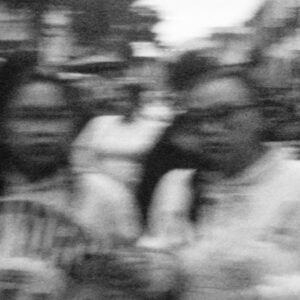
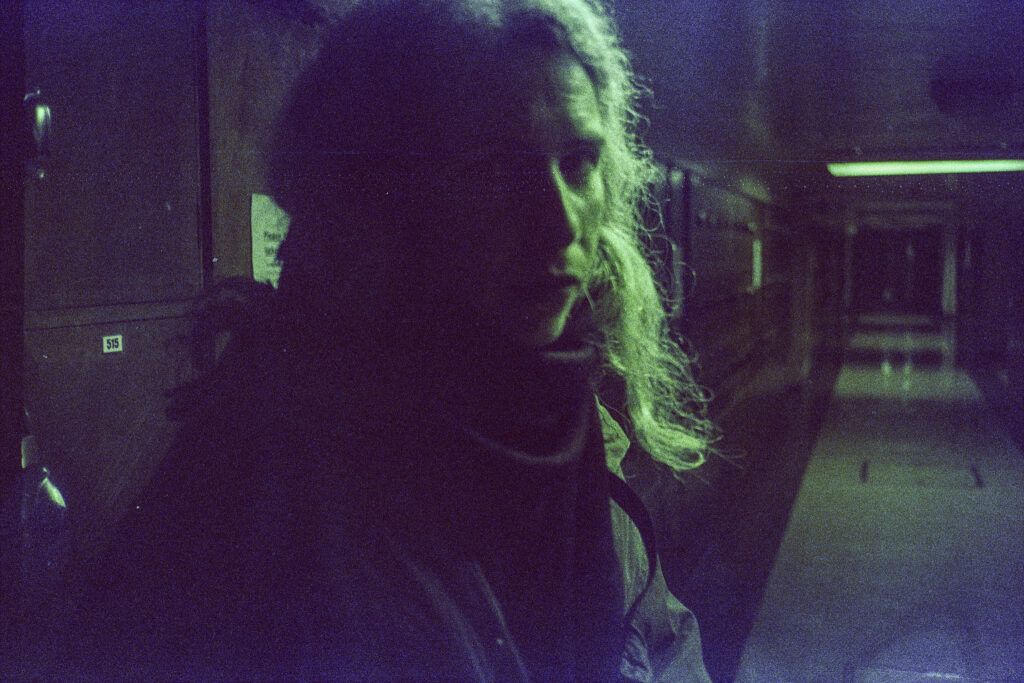
Béal by Juana Robles was the project chosen in the last invitation from BAICC, the International Artistic Residency for Cinematographic Creation promoted by (S8) together with AC/E and LIFT. In September 2025, Juana travelled to Canada to explore the intertwined stories, communities and everyday life of Cabbagetown and Regent Park in Toronto, using an audio recorder and a 16 mm camera. We talked with her about how that intense experience influenced her creative process. The film resulting from this residency can be seen in A Coruña next June at the 17th (S8).
1. Your project Béal changed a lot once you arrived in Toronto. Could you tell us about this evolution and what it finally involves?
During the residency application and research process, the project was going to focus mainly on Cabbagetown, a neighbourhood I researched from Ireland, where I have lived since 2019, based on connections with Irish migration and the Great Famine of the 19th century. I already had a preliminary contact there thanks to a shooting planned at the Cabbagetown Boxing Club, and as often occurs in my work, the exploration of the neighbourhood with its recent and past history was conceived as using a more experimental approach.
But the project changed when I started exploring the neighbourhood. On the first day of location scouting, I arrived at Oak Street, the boundary between Cabbagetown and Regent Park (in an area historically associated with the old Cabbagetown, one of the poorest urban areas in North America in the late 19th and early 20th centuries, which in the 1950s became Canada’s first and largest social housing complex), where I came across George, a homeless person. That encounter changed the way of exploring and expressing, especially the formal approach.
The film then began to revolve around the contrasts and frontiers generated by gentrification: two neighbourhoods separated by a few streets, but with very different realities, even within the same territory. I began to see the need to focus more on today’s struggles, especially in Regent Park, which has been undergoing transformation since the early 2000s, and to use Cabbagetown as a counterpoint, rather than just a narration of its past stories. It isn’t a single perspective, but a collection of voices from different stances on both sides. I constructed the film as if it were bricks being put together, gradually revealing the interconnections and consequences of political decisions, as well as their impact on different groups.
Thus, Béal became an exploration of Cabbagetown and Regent Park as a shared fabric including migration, poverty, gentrification, urban redevelopment, and resistance, all through oral history and static street maps of the neighbourhoods.
The title, Béal, means “mouth” in Irish. It initially referred to the Great Famine and Irish migration, as well as the mouth of the Don River in Toronto, a territory used by indigenous communities as a place for transit, fishing and settlement long before European colonisation in Canada. Throughout the process, its meaning expanded to include orality and the transmission of stories, as well as housing as a theme permeated by speculation and the rationale of capitalism.
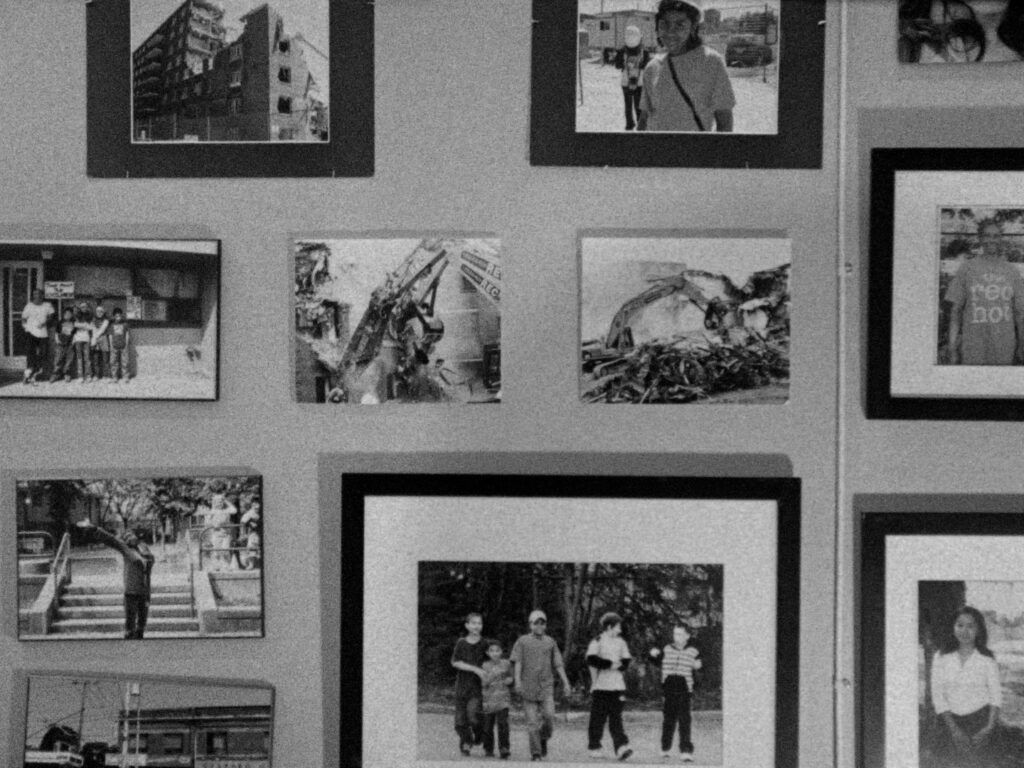
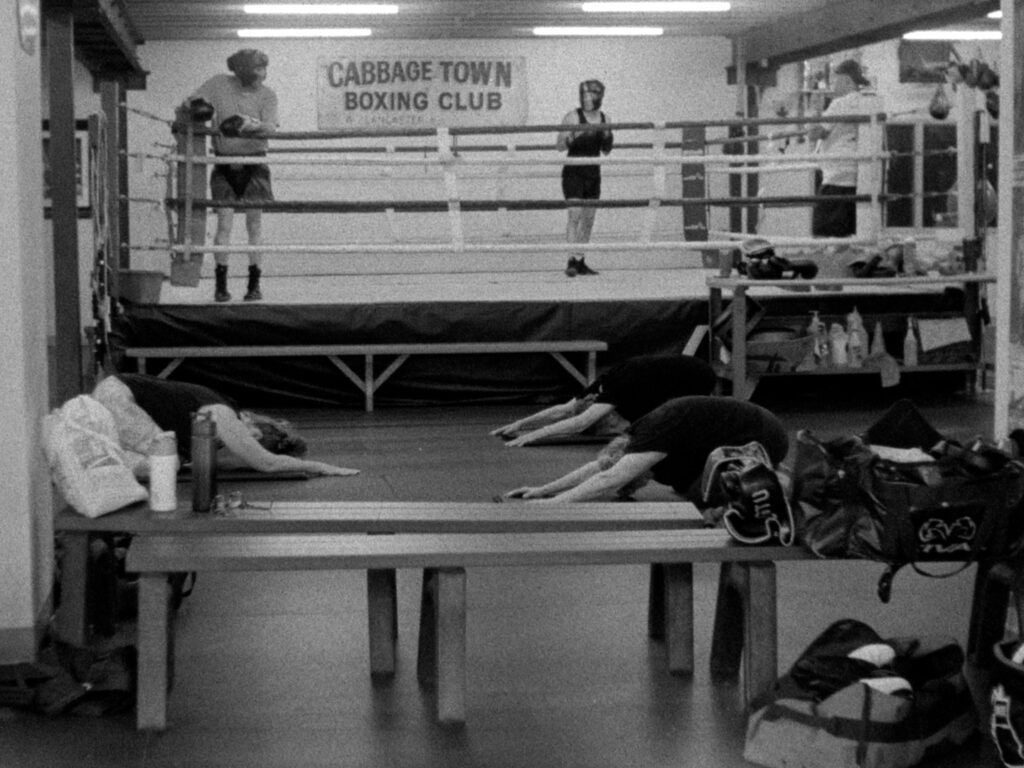
Images of Béal (Juana Robles, 2026)
2. This has been the BAICC project that has focused most on the Toronto community, especially Regent Park. You’ve given them a voice. How did you go about reaching these people?
My access to the community wasn’t a lineal or entirely planned procedure, but was built up through my daily presence in the place, through lucky coincidences and through the openness to trust and embrace the opportunities and connections that arose naturally.
I began with a more formal idea of connection, like the previous contact I had with the Cabbagetown Boxing Club, which would allow me to connect with the Cabbagetown community and its history.
But meeting George was the key, because from then on he helped me connect with other people and organisations.
I came across him sitting on a bench feeding squirrels and pigeons in Elsaida Douglas’ “Peace Garden”, outside a community organisation that provides support, food, and services for people in vulnerable situations. I sat down with him and we began chatting. I felt that we were at a geographical point of tension where social, political and urban histories intersected, and that there was an urgency for people to share their stories and be heard.
I recorded around 15 hours of sound—much of it on the same bench where I met George, with no need to move around. The conversations began spontaneously, with testimonies from different people and communities in Cabbagetown and Regent Park. George preferred not to be recorded, but sometimes he acted as an intermediary: he would tell me who to talk to or who to avoid, and he also looked after the recording equipment. There was no way to schedule meetings; people weren’t showing up, so the only way was to go back to that bench, wait with George, and spend the time together chatting and feeding pigeons and squirrels.
Trust was built up through our shared time, and many of the people I spoke to had been involved with the community for years as residents, workers or activists. Many had gone through difficult times and experiences of crisis in their lives, and they had later created or started working in organisations, or else helping other people on similar paths. Hence, most of the people I spoke to were now in a relatively stable situation so they were able to reflect on and defend the rights of people in situations of greater vulnerability. They offered personal testimonies, but at the same time they spoke of the organisations and their impact on the neighbourhood. This was something that was often lacking when Regent Park had been planned exclusively as social housing, with a design considered to be unsafe without the facilities needed to reduce harm or respond to the realities of the environs, dogged by urban planning decisions and social inequality.
I arrived at the beginning of October, which turned out to be a very mild month with pleasant temperatures and sunshine. That meant people were out on the streets more, and in a more approachable mood. When I left at the end of the month, the temperatures were already close to zero degrees at night, and I wanted to say goodbye to some people, but there was no one left in the usual places on that street.
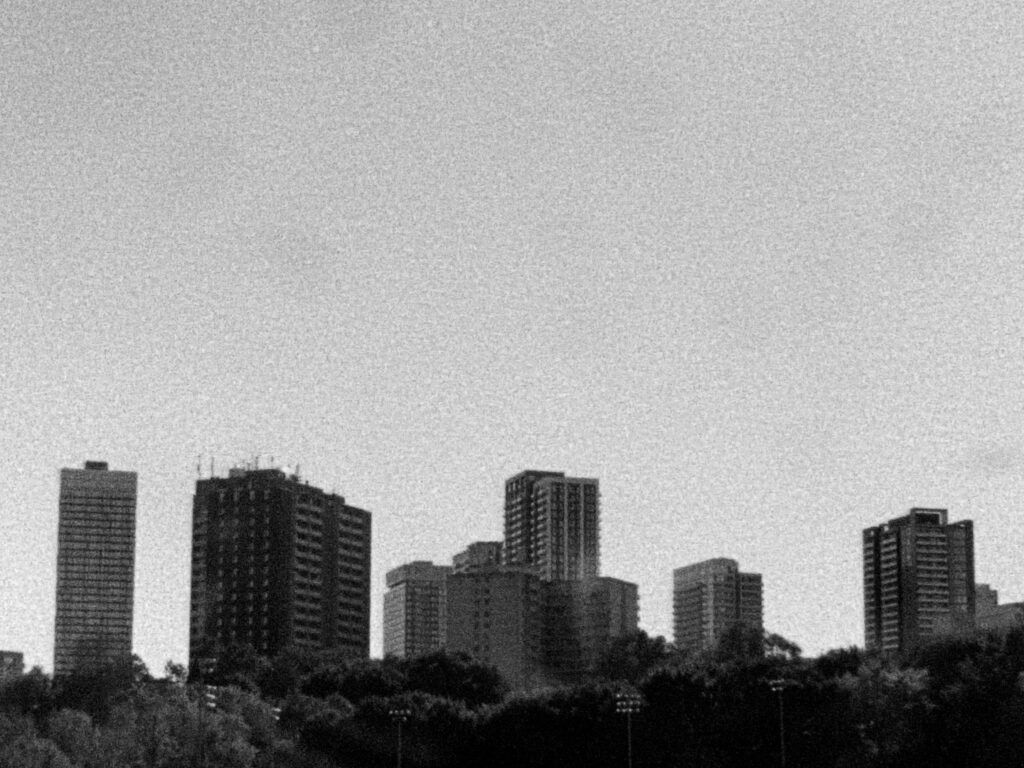
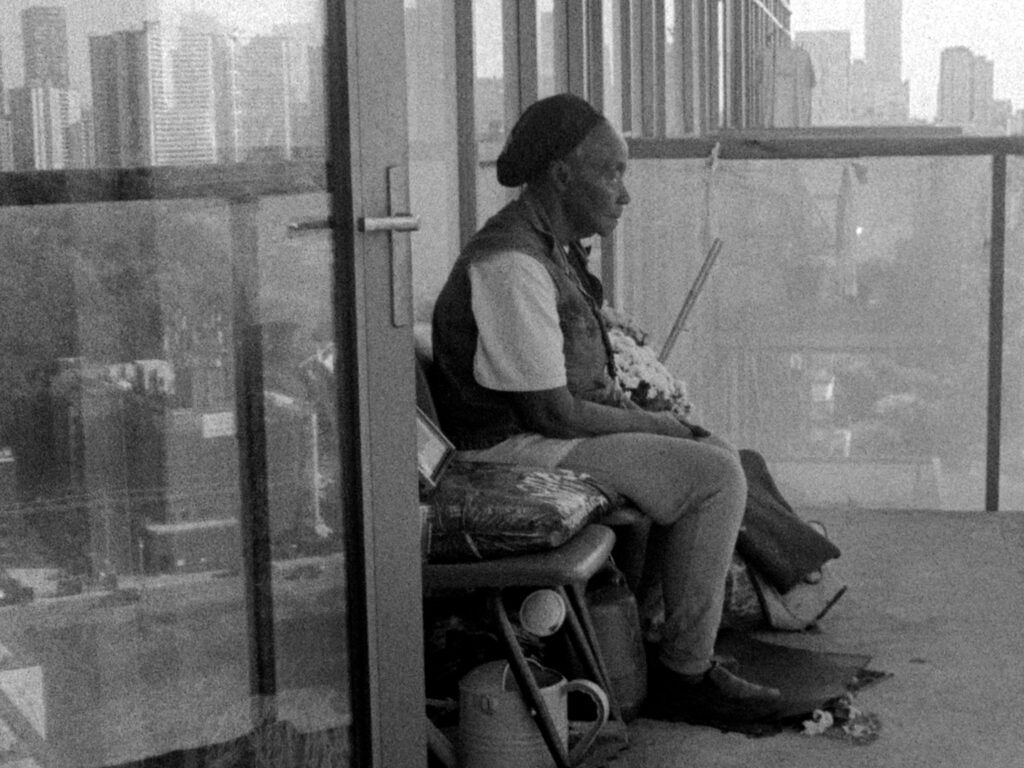
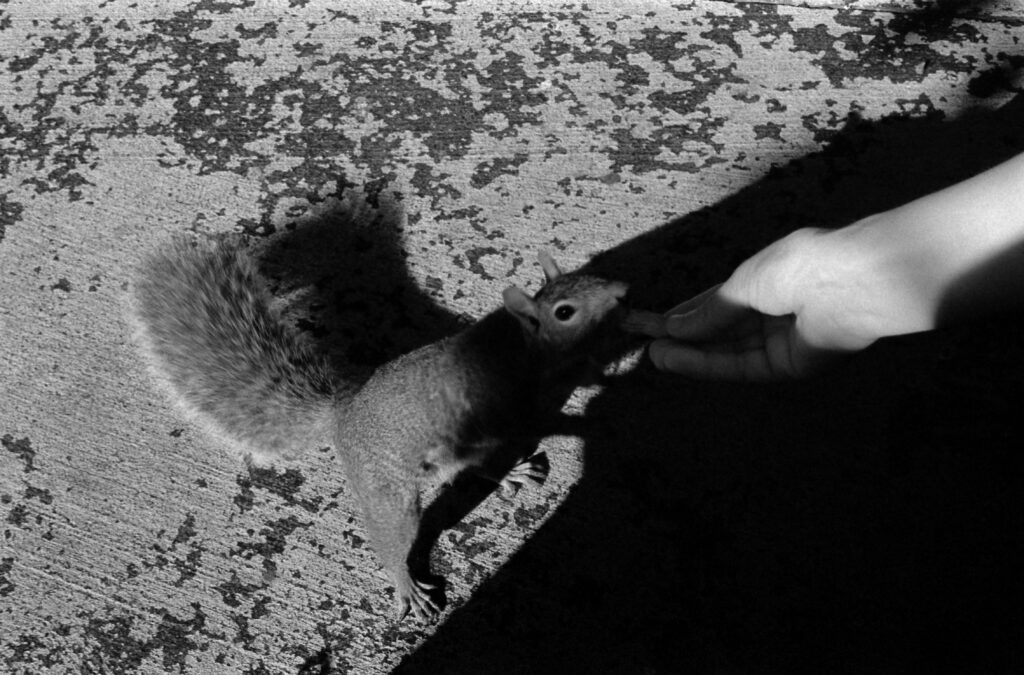
Images of Béal (Juana Robles, 2026)
3. The intimate content has affected the form. Tell us about those visual choices.
The intimate nature of the stories directly influenced the form of the film, especially in the decision not to illustrate the testimonies or expose the people who wished to avoid that. Instead of “depicting”, I sought a space where words, voices and images could coexist and create a dialogue with a nature of its own, keeping some visual distance and finding a balance between creating context and avoiding overly explanatory shots.
The crux of this residency was the encounters and the time spent listening, but I decided not to arrange the film like a diary of those interactions or to turn my presence or my relationship with people into a first-person narrative. I tried to stay on the sidelines as much as possible. My voice doesn’t appear in the film, even though the process involved many informal conversations, not at all like a conventional interview.
With the initial approach, when I hadn’t yet considered these types of interactions and the focus was more on the neighbourhood as a character, the idea of working with the film medium and with techniques like double exposures, variable shutter speeds and frame-by-frame shooting in my opinion would have shifted the attention towards the effects and the form rather than towards the narratives themselves, which worried me. I often work with people outside the most visible contexts, without resorting to dialogue or words, letting the stories express themselves through their body. In this case, however, it was important to shift that focus towards listening and speaking, and to give room for the testimonies and conversations that emerged in the process, since I also didn’t have the usual time to work with collaborators, which in other projects usually lasts around a year.
The stories are often harsh—violence, addiction, displacement, precariousness—which meant not turning them into direct images, but rather letting them exist mainly through their voice and open visual fragments where the framing, absence and pace are aimed at searching for respect, protection, and more familiarisation with the senses.
In that context, the only person clearly portrayed is Elsaida. On the day I planned to film her “Peace Garden” against violence, she herself appeared with a large framed portrait of herself and stood with it in the centre of the garden. I didn’t want to interrupt her or insist on the previously established artistic concept of not showing faces, also because her history and her role as an activist in the neighbourhood are deeply linked to the place. What’s more, Elsaida also invited me to her home in the senior citizens’ building in Regent Park, which allowed me to record different stages of the neighbourhood’s development from unique perspectives. In the end, Elsaida appears at the beginning and the end of the film, thereby rounding off the narrative structure with an opening and closing gesture, a kind of main character.
As I mentioned, the testimonies work as “bricks” that build up the structure of the film, but the image never completely encloses them. There is also a space for the viewer to construct those elements and find their own resonance.
Unfortunately, it wasn’t possible for all the people I met or all the stories to become part of the film.
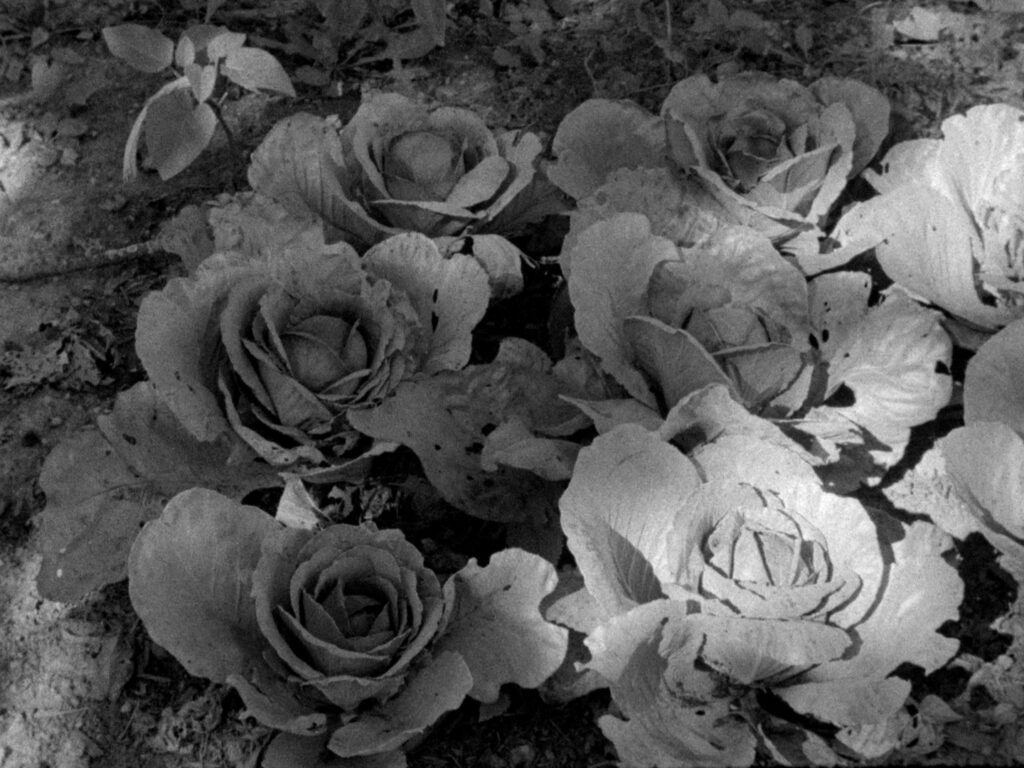
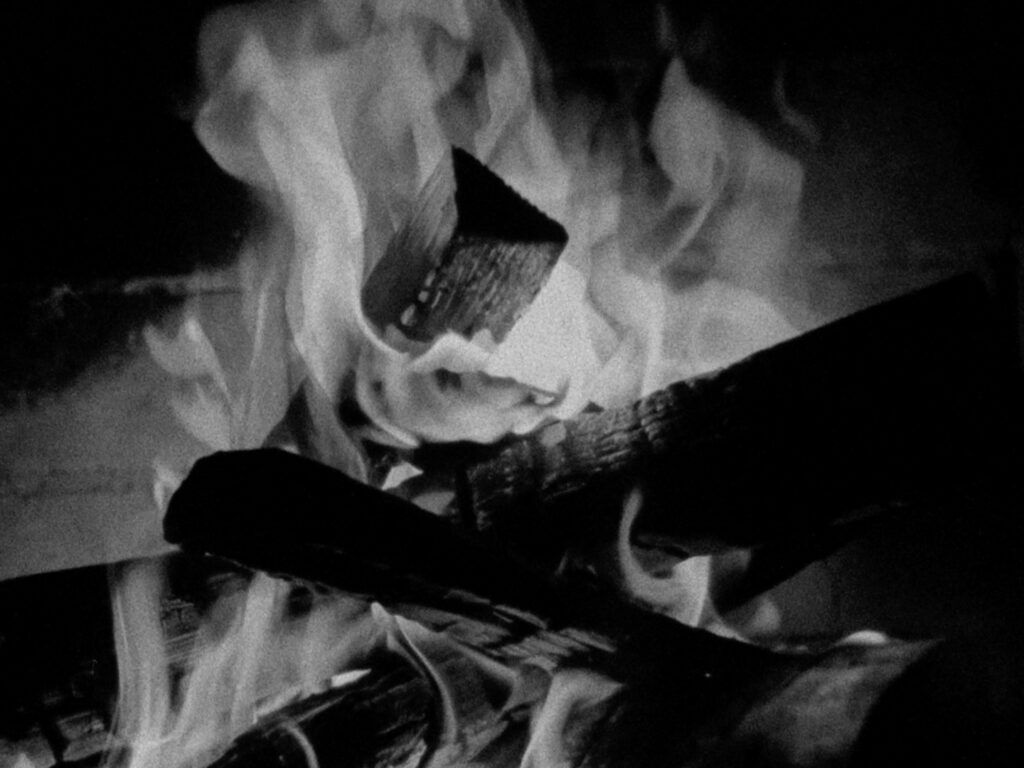
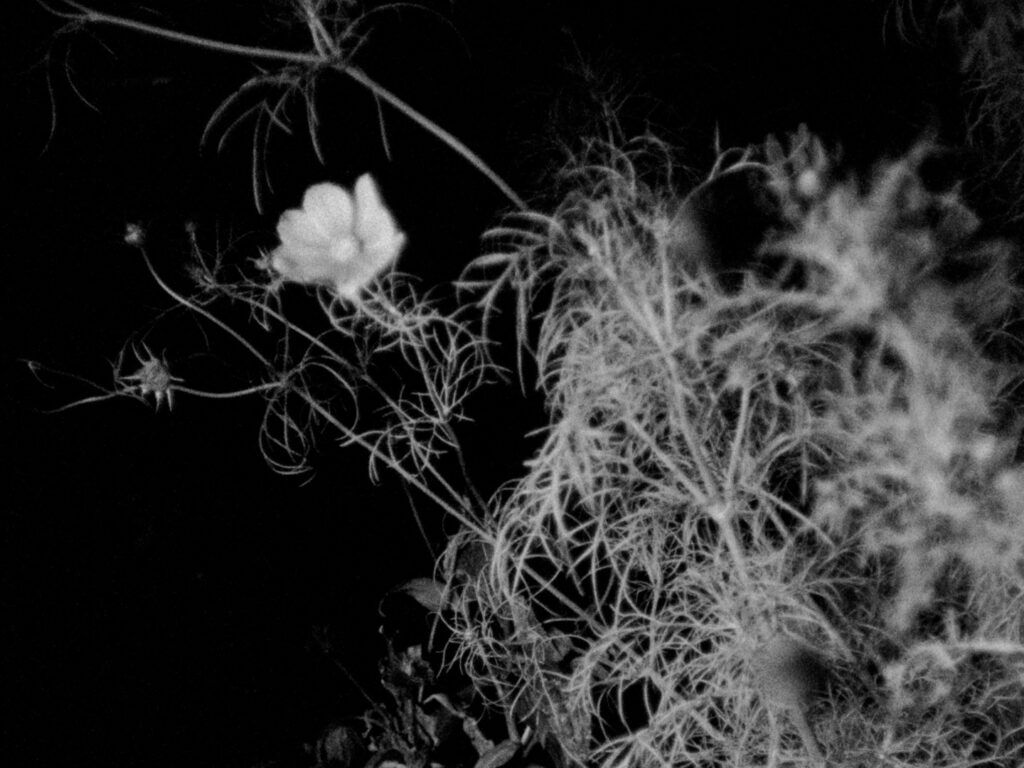
Images of Béal (Juana Robles, 2026)
4. Béal is filmed in 16 mm black and white. What does the analogue format provide?
I think I have to answer that more generally, since I can’t find a specific contribution to this film project that I didn’t already have anyway.
I come from a background in painting and drawing, and I only found full access to the medium of cinema after discovering analogue film through workshops at experimental film festivals, even after two years of training at a (digital) film school.
I see analogue cameras as a tool for sensory work, more similar to a medium like painting. This allows the work to speak through the material nature of the medium itself, which I can’t achieve with digital cameras or with interaction with never-ending menus.
I film exclusively in analogue, except for occasional collaborative projects. If it’s a solo project, then digital isn’t an option.
It’s simply my tool for work. Analogue film enables me to create a unique connection with the subject—whether it’s a person, an object, or nature—which is not easy to explain. The camera is a kind of protection, but it also connects me: I can participate in the world without being absorbed by it. Part of this experience means simply looking through the viewfinder, the sound, and the physical interaction with the camera.
I enjoy the element of surprise; I try to be there fully in the moment and for each shot to be worth it, almost becoming a performative or ritual activity.
I think that using this format is also very much connected to the positive experience within the experimental film community, where I finally felt at home after many years of trying different disciplines in the artistic sphere, or even of stagnation. The first few times my films were shown, I didn’t have a website, an Instagram account, or an established career, and I think that was a wonderful thing. It encouraged me to keep going, to build up a language of expression and to trust in a welcoming community that embraces the creation of independent, non-commercial work.
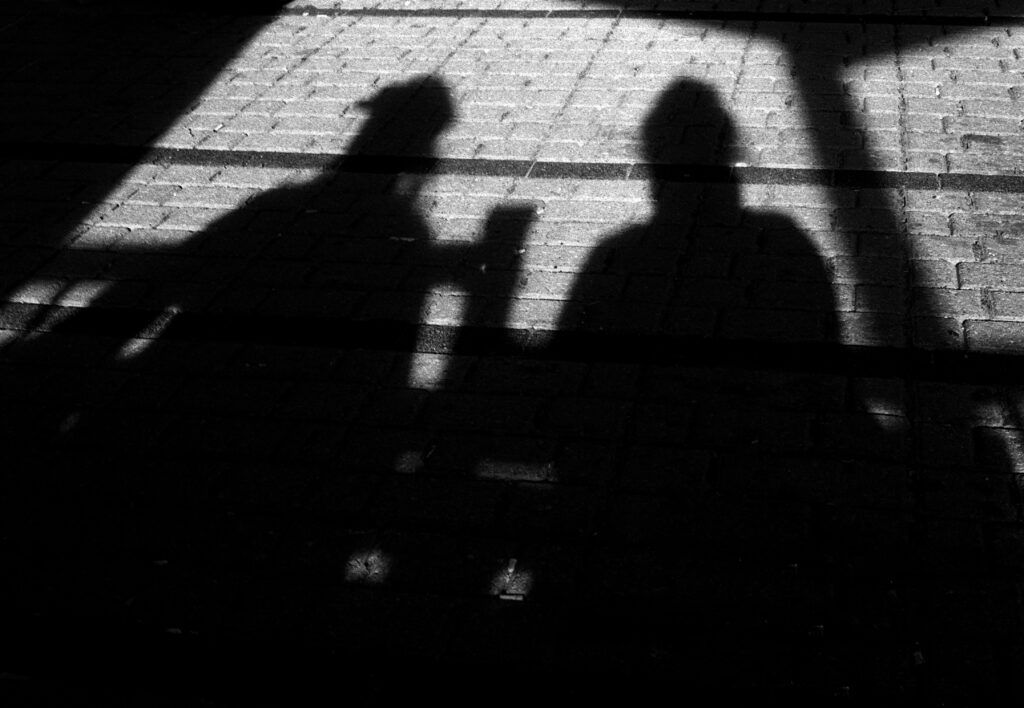
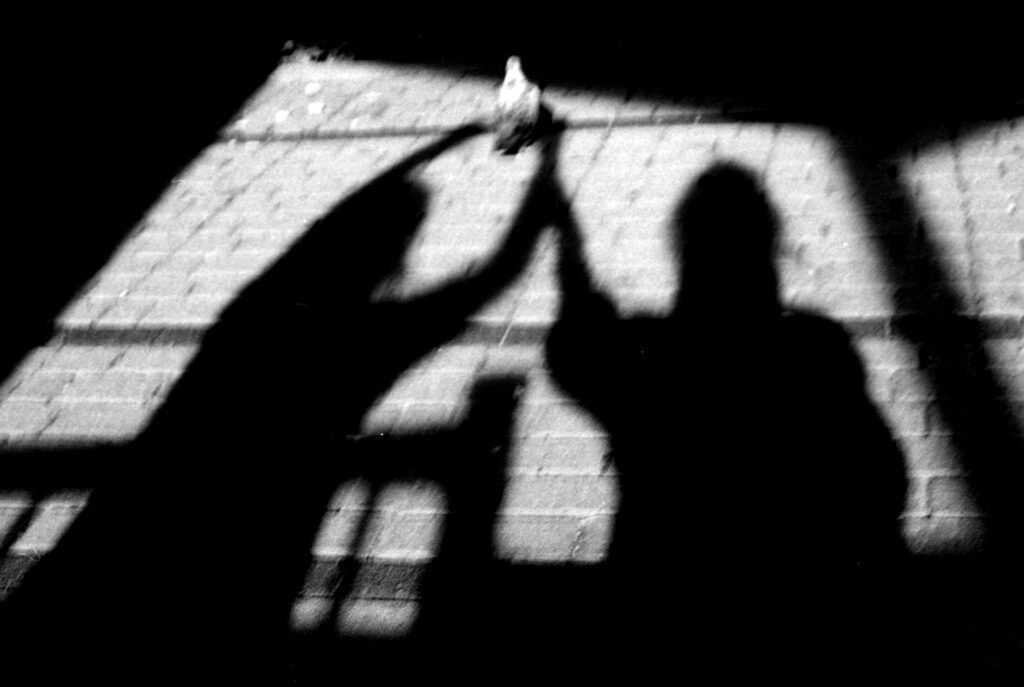
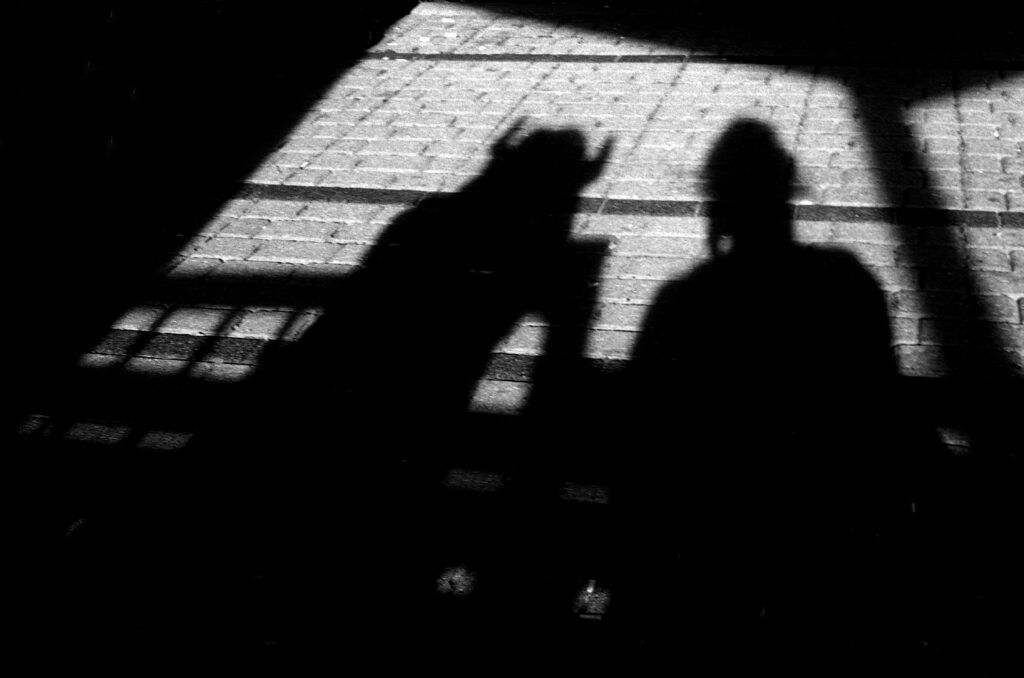
Juana Robles and George filming Béal in Toronto
5. How has it been received in Toronto’s experimental community and institutions?
Its reception in Toronto’s experimental community and LIFT (Liaison of Independent Filmmakers of Toronto) has been extremely positive. I’ve had a lot of support, good facilities and access to equipment, which has allowed my work and practice to evolve naturally, with no pressure or predetermined expectations.
This experience also reinforced a procedure-based way of working, where listening and observation take priority over purist structures within experimental analogue cinema, or on the contrary, over hermetic narratives and predefined results, thus opening up to any type of cinematic language while understanding experimental cinema as something gradual rather than an isolated genre.
During the residency I also met members of (S8) who were presenting work from other residencies, which opened up new connections with filmmakers and organisations during film screenings, dinners and informal gatherings. Moreover, I was able to attend various screenings in the city and visit processing and scanning laboratories, which expanded my network within the local audiovisual world.
It has been a very generous and enriching experience.
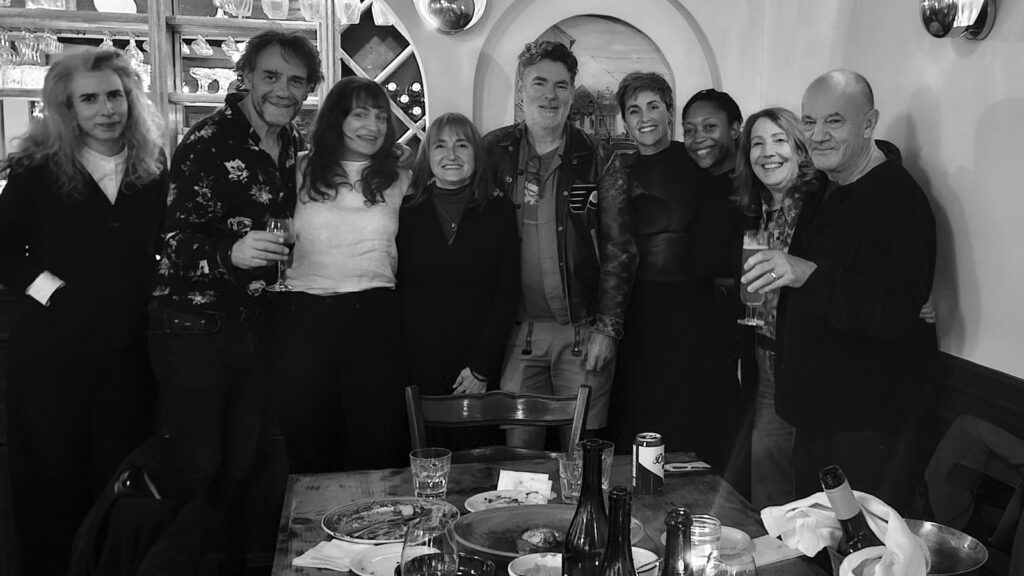
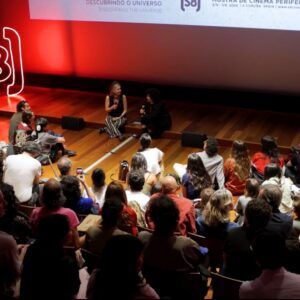
Meeting with filmmakers and programmers in Toronto. From left to right, Juana Robles, Ángel Rueda, Almudena Escobar, Ana Domínguez, John Porter, Nela Fraga, Sonya Mwambu, Janine Marchessault, Philip Hoffman.