THE COSMIC SHUTTER
Filmoteca de Galicia | Tuesday June 2nd | 6 pm | Free entry to all venues until full capacity. It will not be possible to enter the venues after the screening has started.
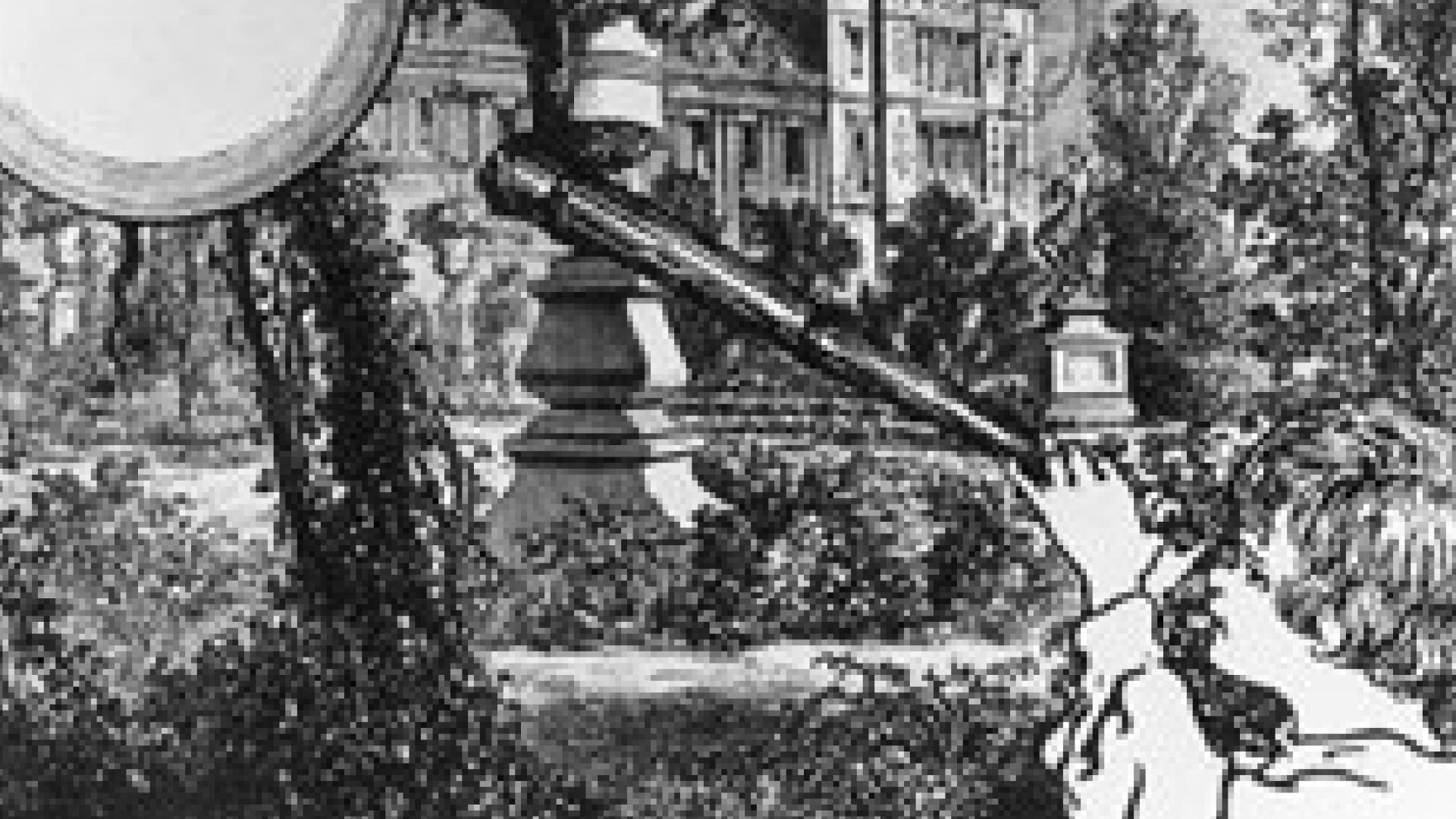
Orb
Larry Jordan | 1975 | United States | 16 mm | 4 min
A compact, full-color cut-out animation as ephemeral as the colors swimming on the surface of a soap bubble. The eternal round shape, the orb—sun, moon, symbol of the whole self–—balloons its inimitable and joyous course through scene after scene of celestial delight, fixing at last as the mystical globe encasing the lovers whose course it has paralleled throughout the film.
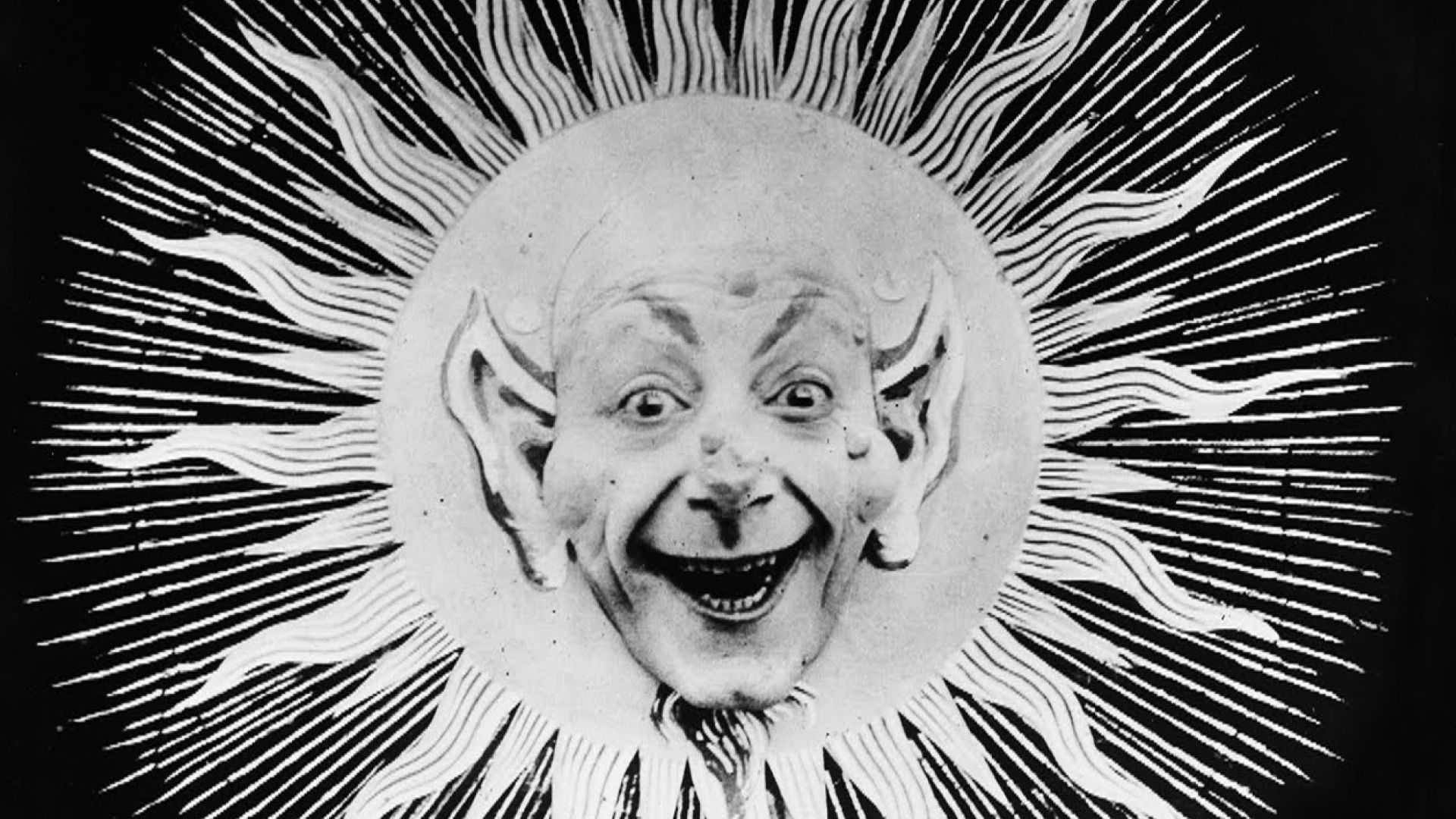
The Eclipse, or the Courtship of the Sun and the Moon
Georges Mélies | 1907 | France | 35 mm to digital | 9 min
An elderly medieval astronomer invites his students to contemplate a solar eclipse with his telescope. In this mocking vision, the Sun and the Moon have human faces, flirt with each other, and produce an impressive shower of maiden-stars in the sky.
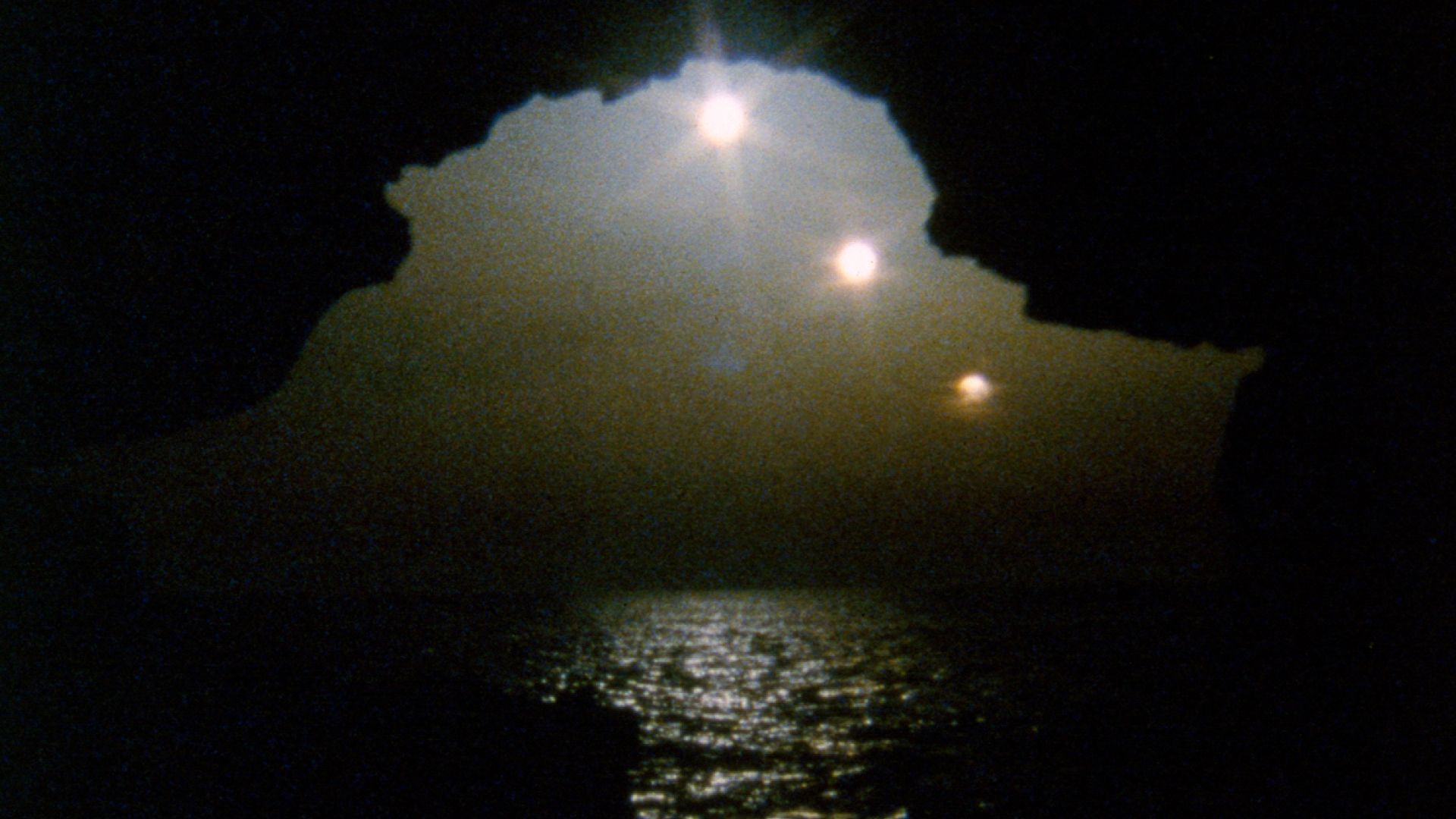
Eye Eclipse + 3 Suns + Solar, The Blindman Eating a Papaya + Heat Ray
João Maria Gusmão & Pedro Paiva | 2007‒2011 | Portugal | 16 mm | 9 min
Four high-speed films on analogy, materialism and vision. Eye Eclipse is based on an analogy between the human eye, the egg and the moon, in which the artists investigate the eclipse of a hidden planet, the existence which lies beyond the concept of visibility as an obscure material which exists though it is not seen. 3 suns is a triple exposure of a sun set through a cave. It resulted in a sort of thought experiment related to Newton’s description of an image rémanent in the eye produced by looking directly at the sun. Here it is staged a conceptual hypothesis on blindness, time and suspension of vision through a trilemma. In Solar, the Blind Man… we are faced with the blank stare of a blind man, who haunts the observer in a ghostly manner as if his blindness were capable of breaking through the convention of the fourth wall. Heat Ray follows the same conceptual framework. It is a reconstruction of Archimedes’ incendiary mirror system, burning the film emulsion due to the overexposure to the mirrors’ reflections on a screen.
(João Maria Gusmão & Pedro Paiva)
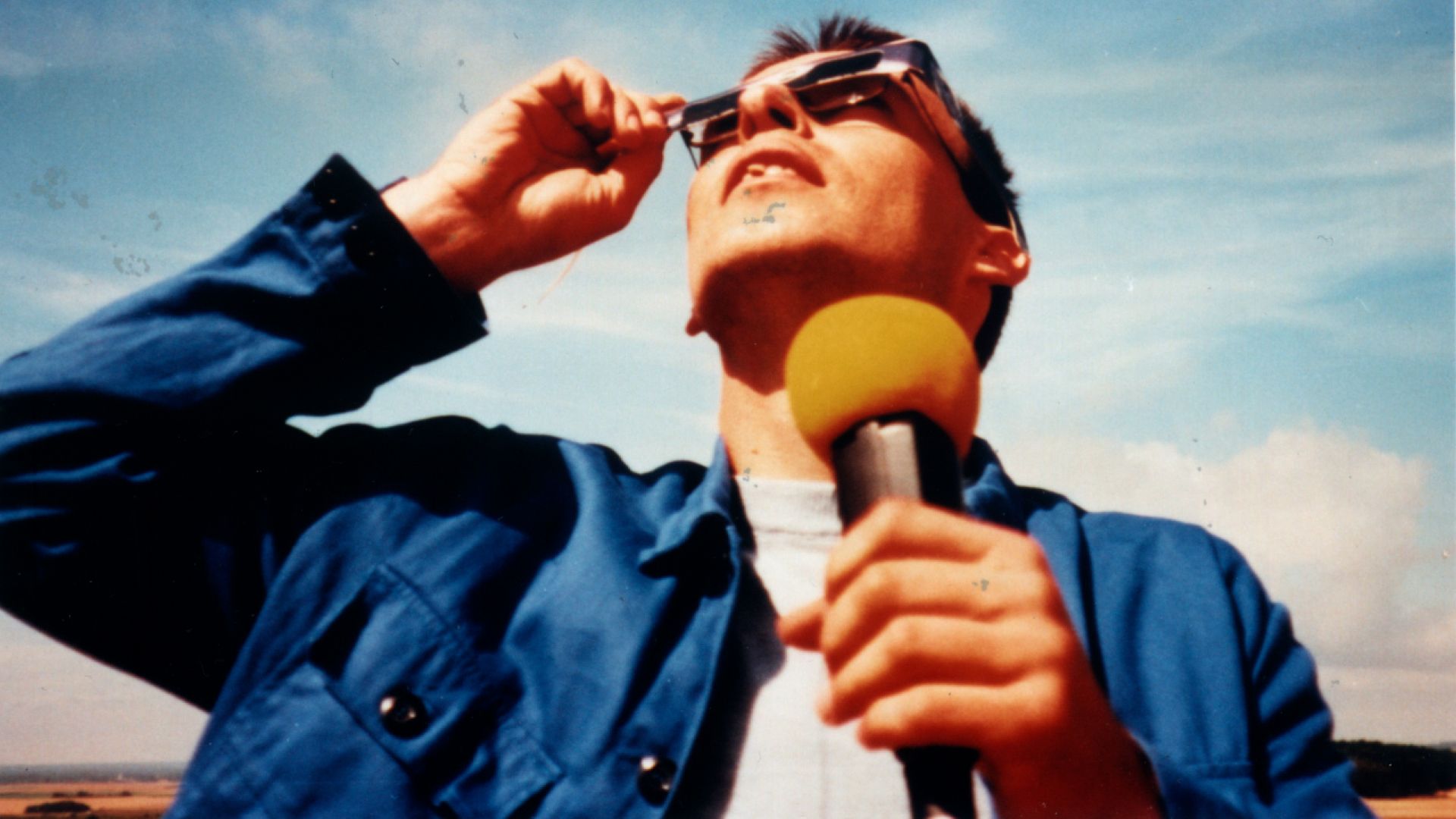
Ich Bin 33
Jan Peters | 2000 | Germany | Super 8 to digital | 3 min
On 11th August, 1999, I loaded a roll of Super 8 film into the camera and stood in front of it to summarise what my life had been like over the previous year, as I do every year. But this time I was surprised by an eclipse…
(Jan Peters)
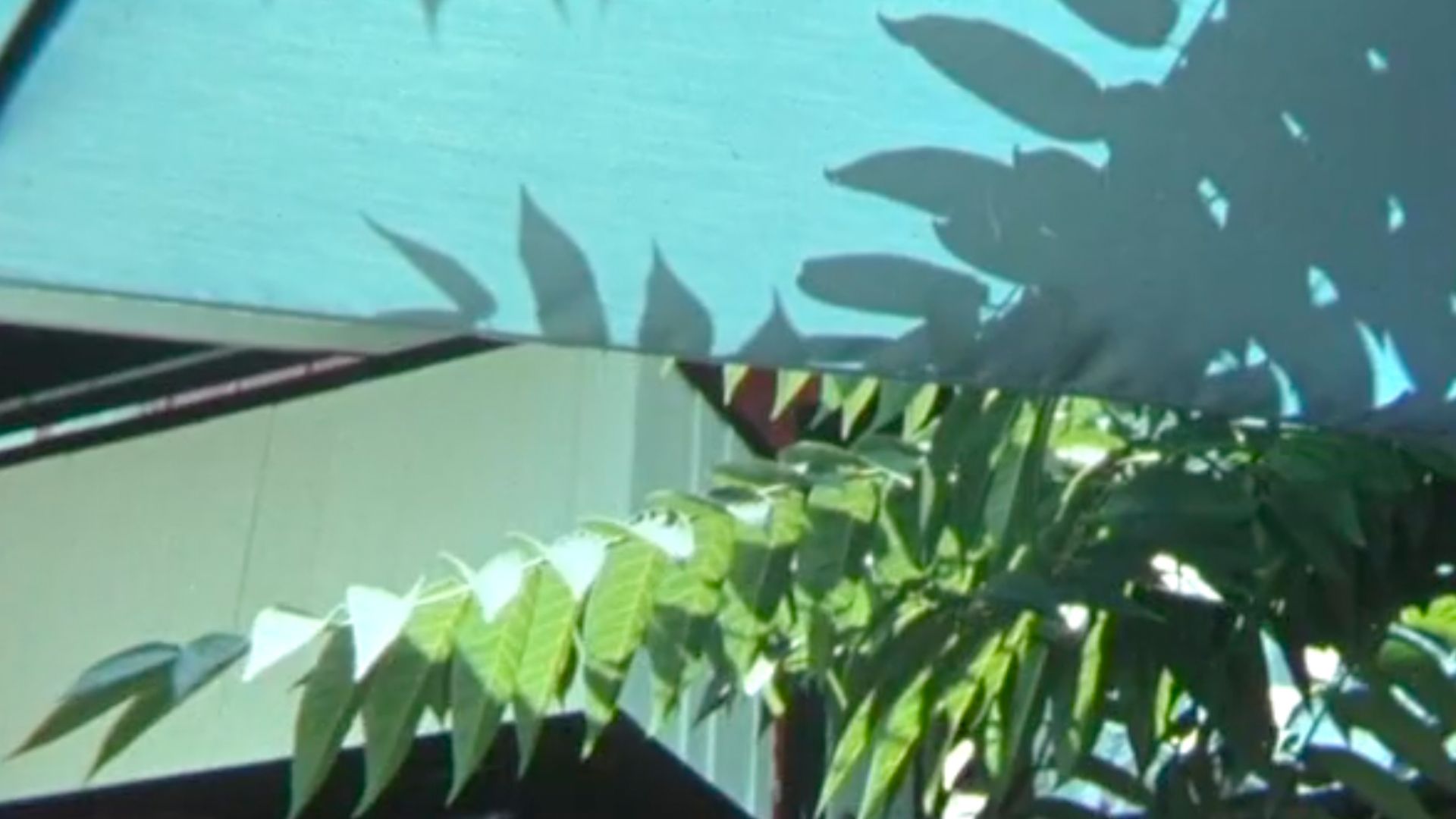
Shutter
Alexi Manis | 2010 | Canada | 16 mm | 9 min
Shutter tracks the rising sun, the lengthening shadows and the darkening day of a solar eclipse. Using live footage of the 1981 total solar eclipse documented on film by amateur astronomer Andreas Gada, Shutter presents a visual metaphor for the shifting and magic light that occurs on the rare days of this celestial phenomenon. An original sound collage reflects the haunting power of the natural world.
(Alexi Manis)
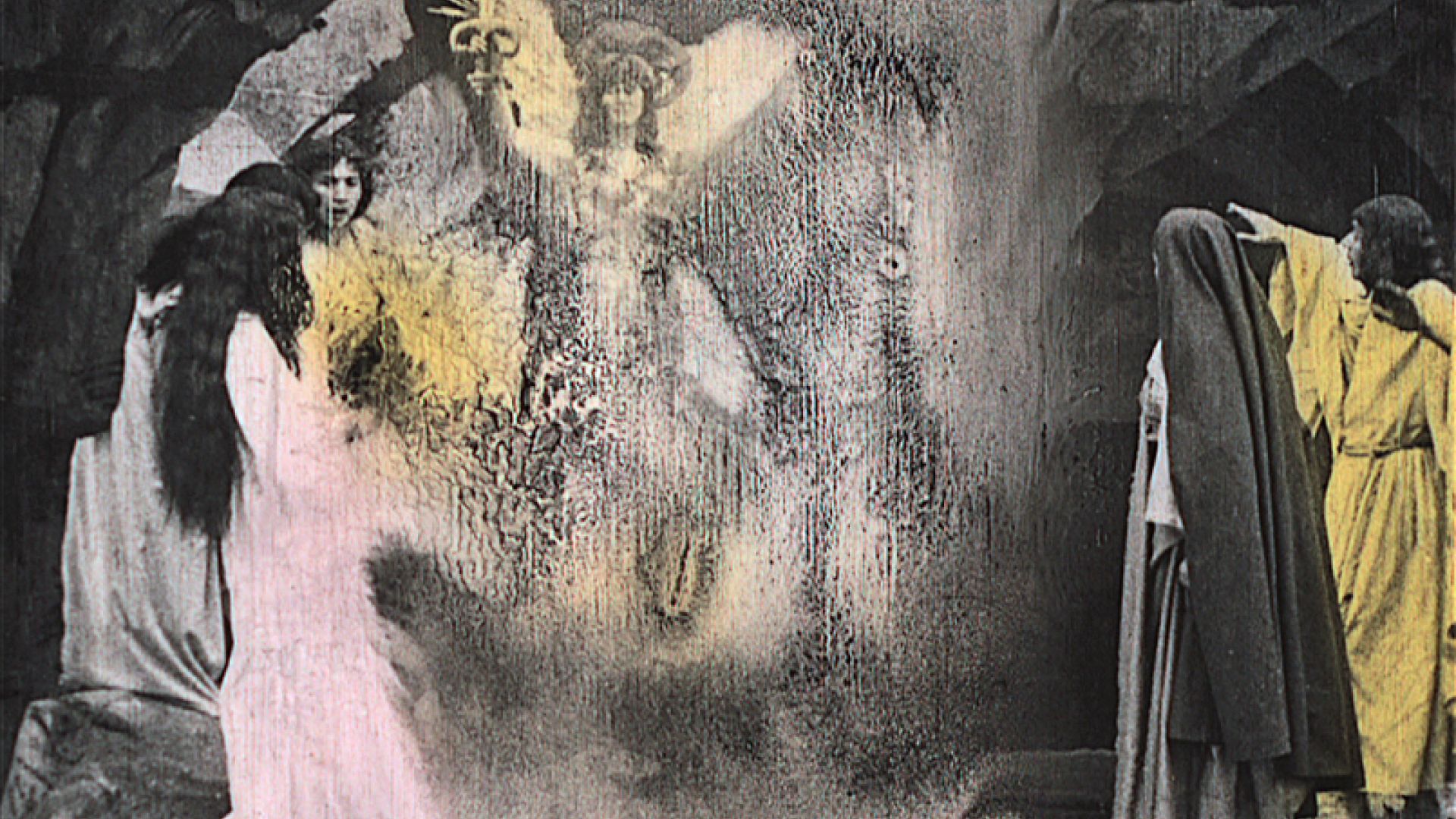
Just Ancient Loops
Bill Morrison | 2012 | United States | 35 mm to digital | 24 min
In Just Ancient Loops, filmmaker Bill Morrison uses high resolution scans of ancient nitrate footage, as well as newly created CGI renderings, to depict different views of the heavens. With an original score by Michael Harrison, performed by cellist extraordinaire Maya Beiser.
Screening dedicated to the memory of Michael Harrison (1958‒2026).
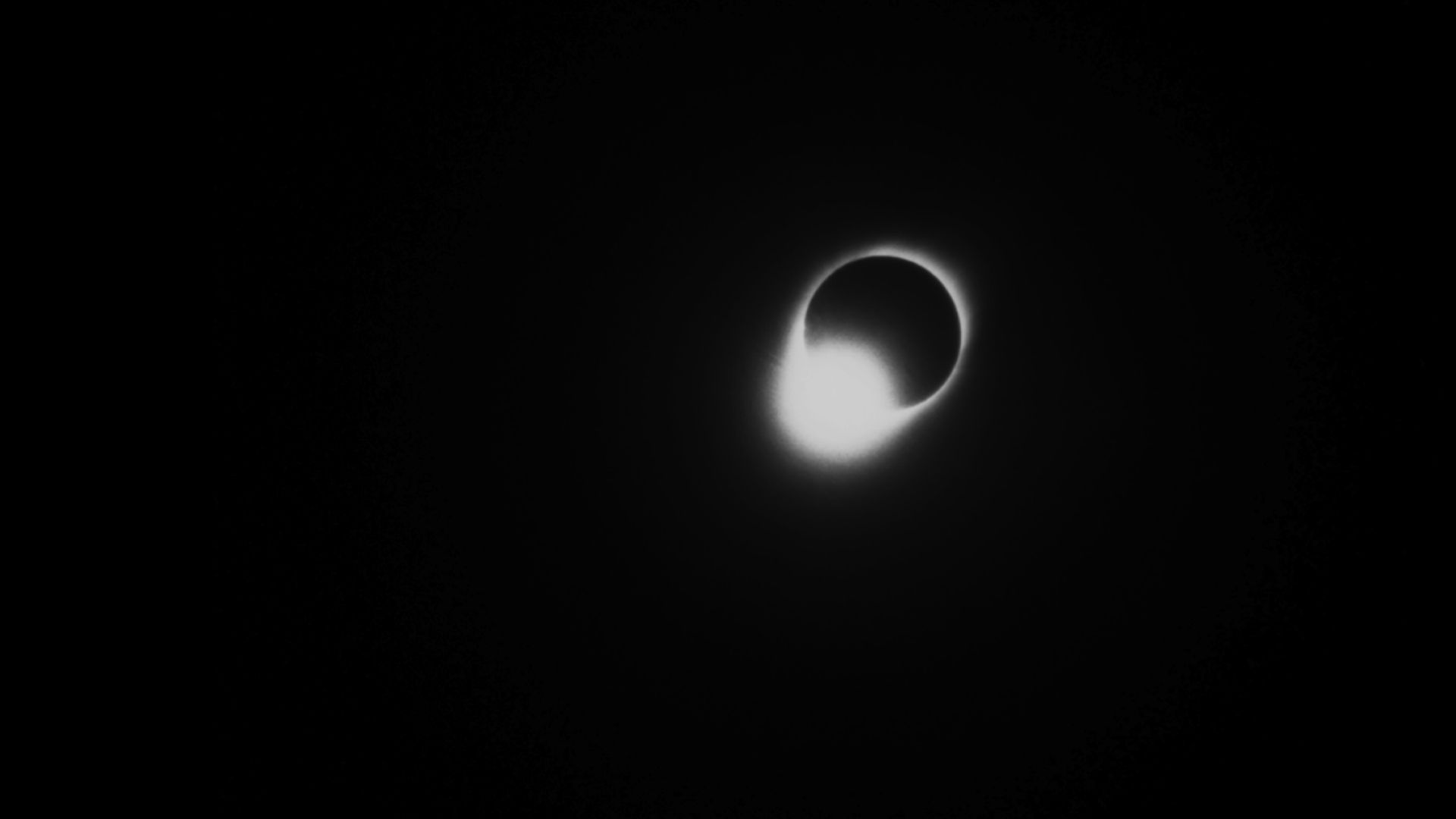
Condor
Kevin Jerome Everson | 2019 | United States | 16 mm to digital | 8 min
A 16mm, black and white film of the solar eclipse over the coast of Chile, 2nd July, 2019, capturing 100% totality and audio in real-time. The condor is the state bird of Chile.
This is part of an ongoing series of films capturing the solar eclipse that includes Polly One and Polly Two. My work must project and reveal the materials, procedure and process. A light flare, over-exposed film, colour flares, distorted sounds and even prolonged taping enhances my notion of materiality. Procedure is the formal quality; the process is the execution of the formal quality. Once I have a grasp of procedure, the process becomes a discipline.
(Kevin Jerome Everson)
THE COSMIC SHUTTER
For centuries it has been possible to see an eclipse without looking at the sky, thanks to the optical miracle of projecting moving images. Before the invention of cinema, one of the most convenient ways to observe eclipses was through a camera obscura: astronomy students were able to contemplate it thus without damaging their eyes, and could even make measurements and drawings using the projected image. The first film to capture an eclipse appeared in 1900, thanks to the magician and member of the British Royal Astronomical Society, Nevil Maskelyne. He filmed it on an expedition to North Carolina using a special telescopic adaptor to his camera. But even before that, if we venture a guess, we can imagine that the first film of an eclipse was seen on Eadweard Muybridge’s zoopraxiscope, the first device to project moving images based on chronophotography. On 11th January, 1880, Muybridge captured a series of 21 consecutive photographs of the phases of a solar eclipse in Palo Alto, California, commissioned by Leland Stanford.
That juncture between cinema and eclipses is natural. Ultimately, they may be the most fascinating light phenomena that exist: cinema manufactured by human science, and eclipses by nature. In a solar eclipse, the Sun, the Moon, and the Earth align, turning the Moon momentarily into a kind of cosmic shutter. And that shutter—which creates the intermittent darkness between the still images of a film—is precisely what makes cinema possible, as it is a key factor in the illusion of movement.
Considering such coincidences (and more), this programme attempts to explore the possible ways an eclipse can take shape in cinema without necessarily being a mere record of it. Every film puts forward a way of thinking about eclipses, while also showing the very nature of cinema. We begin with Orb (1975) by Larry Jordan. The use of symbolism and astronomical images from the 17th, 18th, and 19th centuries is very common in Jordan’s universe of animated collage. In Orb, the shape of the circle dominates, which can be a balloon or a clock, but it is also a representation of the Sun and the Moon. In the film’s subtle, slow overlapping of circles, we begin the session with barely a suggestion of its theme. Connecting with the idea of representation, in The Eclipse, or the Courtship of the Sun and the Moon (1907), Georges Méliès used scenographic and optical illusionism to create a disconcerting eclipse in which the Moon is an ephebe and the Sun an elderly satyr making a lascivious approach. The astral event here becomes humorous and carnal. Continuing with “false eclipses”, in Eye Eclipse + 3 Suns + Solar, the Blindman Eating a Papaya + Heat Ray (2007‒2011), the Portuguese João Maria Gusmão and Pedro Paiva reflect on vision and optics through metaphorical images: an egg that is both an eye and a moon; a landscape in which luminous stars multiply; and the dead, cloudy pupils of a blind man.
After this symbolic approach, we look closer at reality. In Ich Bin 33 (2000) by Jan Peters, we do not actually see the eclipse, but its effects on Earth and on the exposure of a film. Shutter (2010) by Alexi Manis plays with the idea we mentioned earlier of the eclipse as a cosmic shutter. Manis, using a delicate interplay of light and shadow, recreates the rarefaction of light during the phenomenon. What Manis is suggesting materialises in Just Ancient Loops (2012) by Bill Morrison, whose montage gives us the connection between the cinema camera’s shutter and the Moon. Through a compendium of found footage, Morrison’s film examines the possible ways of visualising an eclipse: telescopes, lenses, depictions of the universe, and also the very cultural significance of the skies and their iconography. Finally, it is the projector’s own beam of light that appears to be the eclipsed sun: that is what is achieved by Kevin Jerome Everson’s Condor (2019) in its way of conveying the observed phenomenon to the cinema hall. The cosmic shutter, the camera shutter, and the projector shutter all converge in complete astral alignment, thus ending the programme.
Elena Duque