SINAIS LATINOAMÉRICA
Cantones Cine | Saturday June 6th | 1:00 pm | Free entry to all venues until full capacity. It will not be possible to enter the venues after the screening has started.
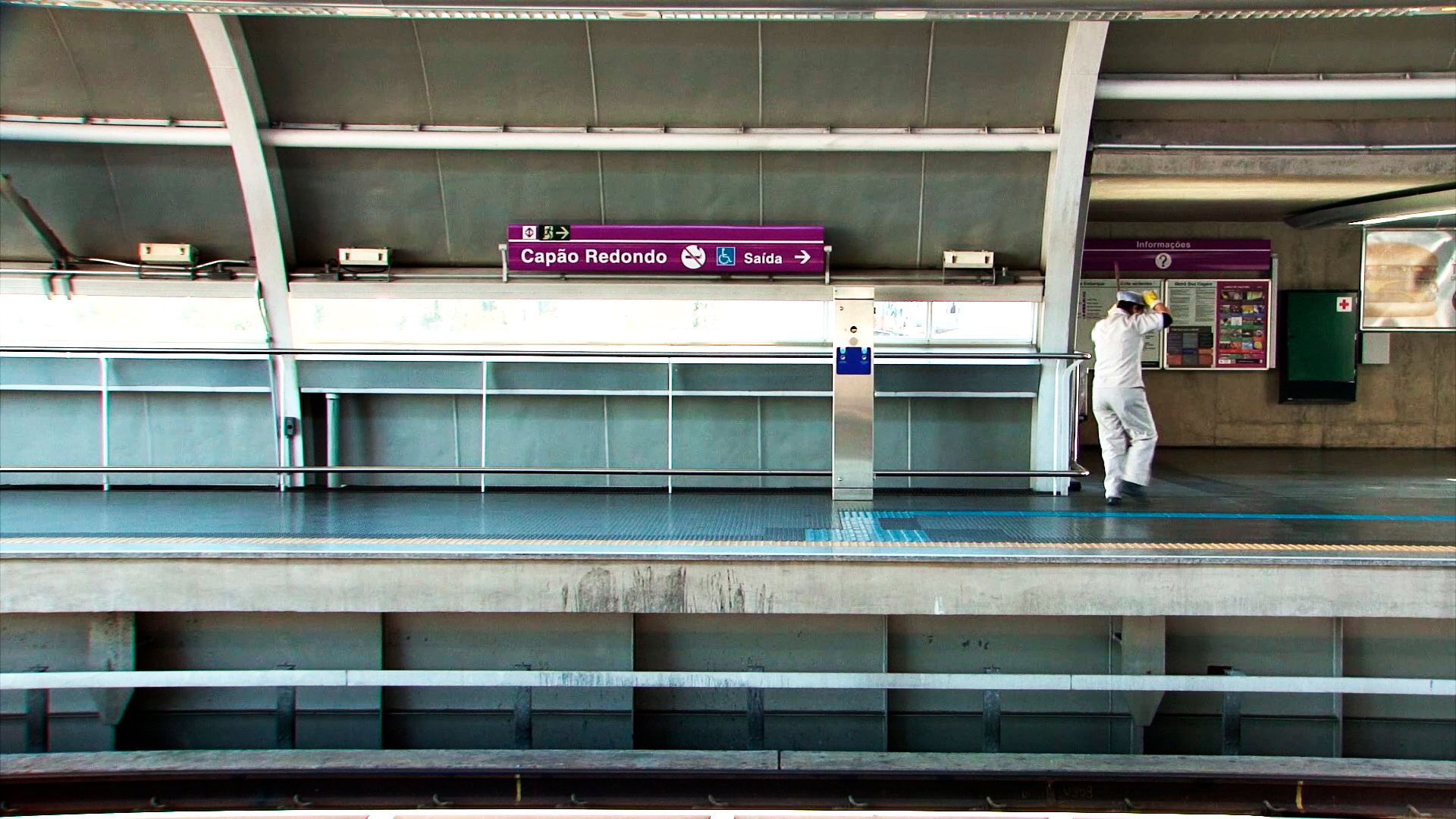
Meu Amigo Pedro Mixtape
Lincoln Pericles | 2023 | Brazil | Digital | 9 min
Filmmaker Lincoln Péricles (LK) revisits memories recorded on the first cameras and microphones he had access to, putting together a film in rap mixtape format, mixing sounds and images from Brazilian cinema and denaturing images of work.
(Lincoln Péricles)
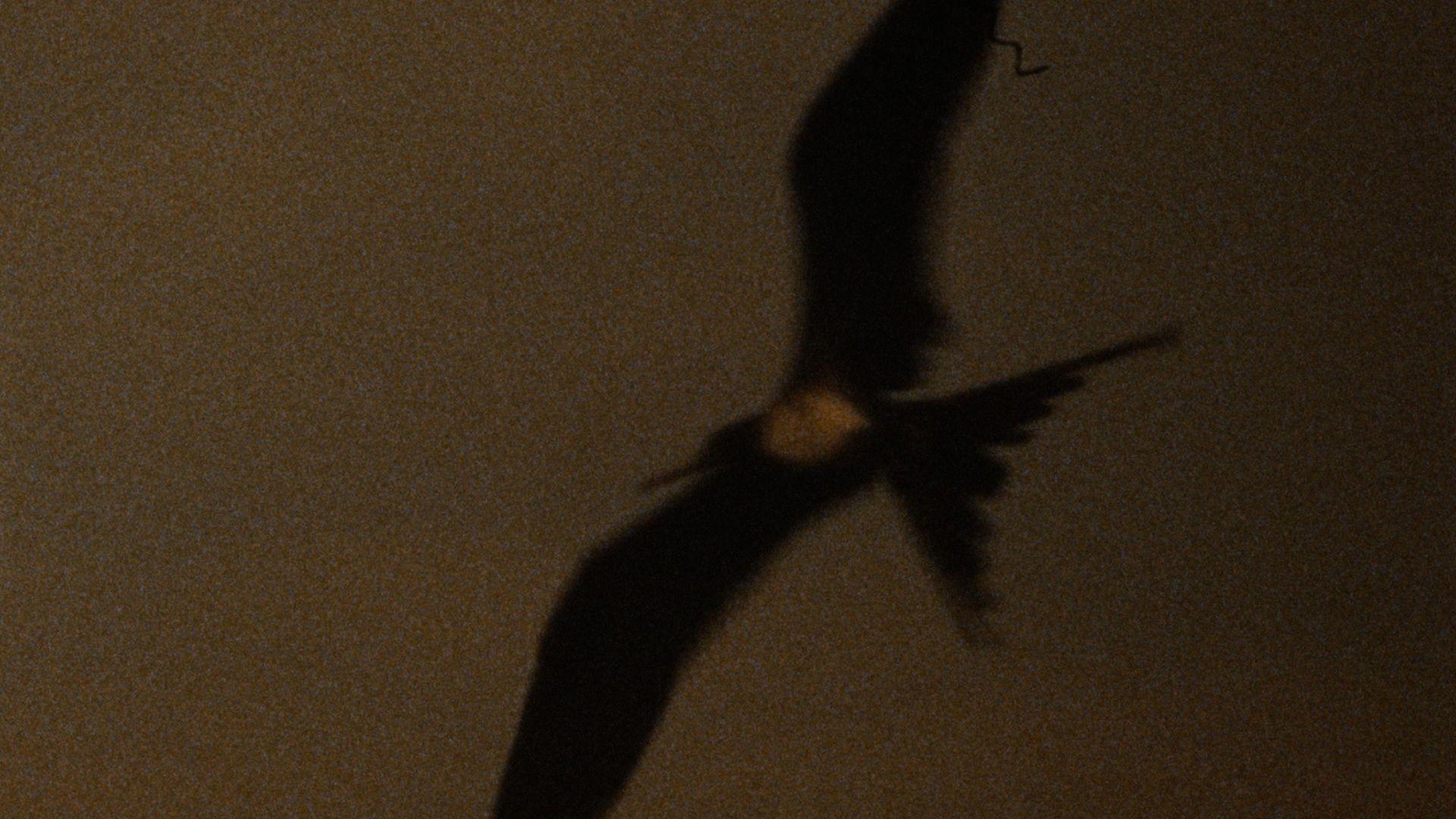
Pompa y Circunstancia (Pomp and Circumstance)
Daniela Delgado Viteri | 2026 | Ecuador, Spain | 16 mm and 8 mm to digital | 11 min
In this country, the sun beats down at ninety degrees with no mercy: it does not let you cast a shadow or look at the sky. We’re fed up with it by now. So, with these bodies that seem very small, close to the ground and forced to keep their gaze low, maybe it is about time to confront so much excess light.
(Daniela Delgado Viteri)
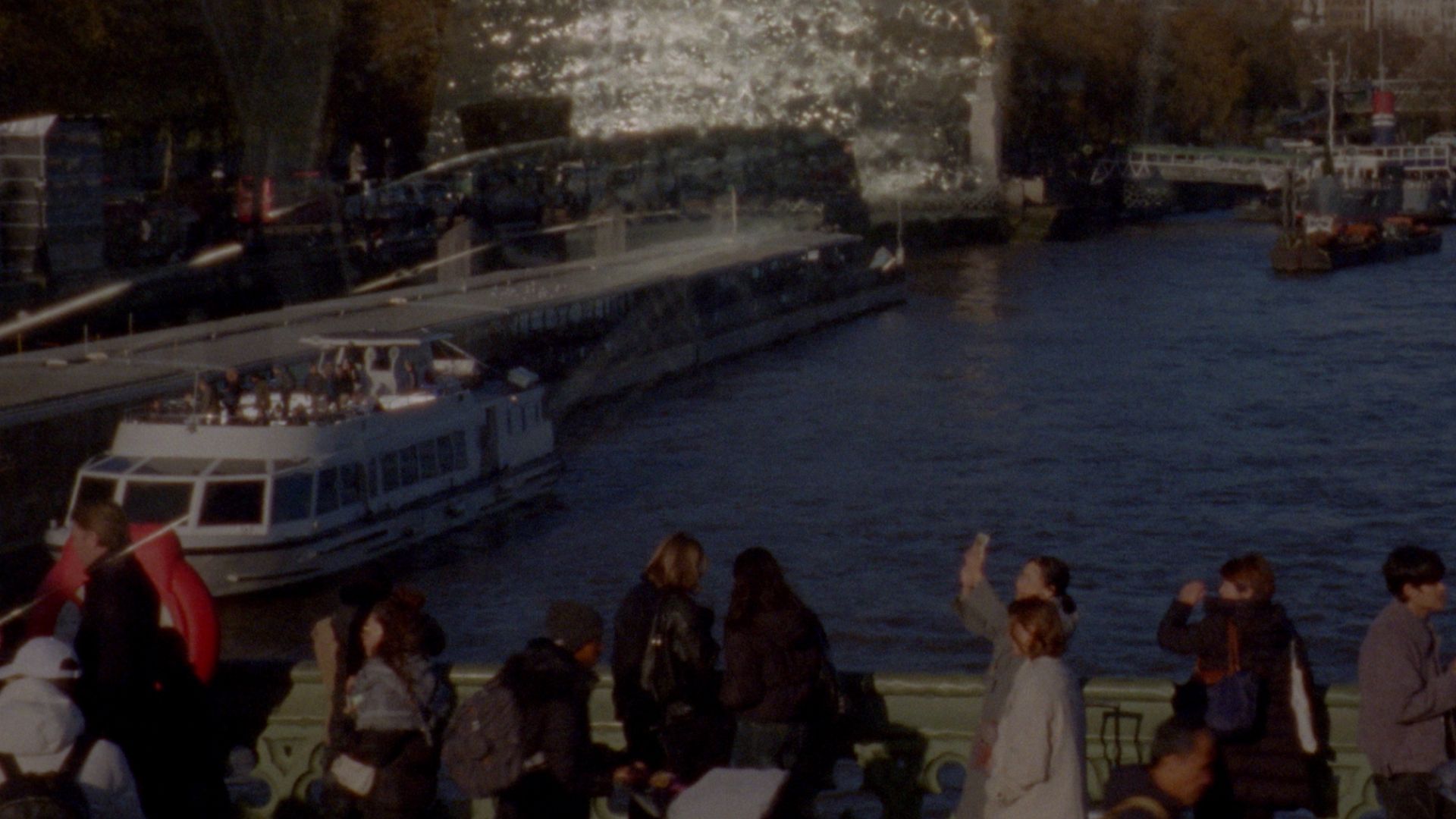
Trizas (Shards)
Luciana Decker | 2026 | Bolivia | 16 mm to digital | 15 min
The British Museum’s collection of Bolivian art, the Victoria and Albert Museum’s jewellery collection, and a private collection of Latin American art in London: in these three locations, there appear before us anthropomorphic figures, exuberant necklaces, and modern paintings. Far from their place of origin, this short film presents them as hanging in the air and enveloped in an aura of tender solemnity. Considerations regarding the dispersion of these works call for a dialogue between the two extremes that seems to want to redefine the scale with which we perceive the transatlantic distance.
(Camilo Falla)
Amor (Love)
Javiera Cisterna | 2025 | Chile | Digital | 8 min
The sun brought relief and the landscapes revealed themselves through the text and the paper into motion. This is a journey through found words that announce a discovery. Their textures construct the sea and the waves in a logbook from the first exploration, from the first
step across the sand to the shore. Amor writes down this joy to emphasise it in a time captured on paper. This film was created using a scanner and is the first chapter in the series Reír al sol (Laughing in the sun).
(Javiera Cisterna)
Lima
Biviana Chauchi | 2026 | Peru, Spain | Super 8 to digital | 04 min
Mischievous Lima, untamed Lima.
Misty Lima, Lima contained.
Lima wounded, beloved Lima.
(Biviana Chauchi)
Nada fuera de la isla: puentes (Nothing outside the island: bridges)
Dalissa Montes de Oca | 2024 | Dominican Republic | 16 mm to digital | 15 min
Memories and fragmented visions encounter a home in light and shadows, weaving the gap between the past, the present, and the loss of a mother.
(Dalissa Montes de Oca)
SINAIS LATINOAMÉRICA
INSISTING ON AFFECTION
Sometimes that doubt or question arises: can cinema save us a little? I look for answers, and I choose to believe that films are portals to places, people, memories, desires, light, motion, sound, poetry. Thanks to films, spaces get created where each and every person processes the experience within themselves, while also rubbing shoulders with others. I once heard that it was necessary to accept that cinema serves no purpose; that perhaps it was necessary to get rid of that burden; that cinema isn’t going to change the world. And well, yes, what or who can change this world? I don’t want to fall into despair, but I do want to get closer to what is vital. I want to get closer to the water, the wind, the tears and laughter; I want to do active listening, I want to believe that films open up channels within us for internal and external motion, that films resonate in the community. I want to affirm that films are affectionate companions in times that need an emphasis on humanity.
This year’s Sinais Latin America programme is a basket full of memories that illuminate us through affection, appealing to what Jonathan Schwartz called “sensory memories”. These are unconscious sensations of being in a place that sometimes fade with distance, the passage of time and life, but which return to us as reminiscences or déjà vu when we experience it again. Schwartz suggests it as “a way of rewriting memories after a long period of time”. Taken together, the films selected take us by the hand and lead us through affective relationships via sensory memories of Latin American cities, the sea, the sun, a family home, and material fragments of Latin America in European museums and collections.
The train is a symbol of progress, of industrialisation, and it is part of the founding history of cinema. An underground train station: Capão Redondo in the city of São Paulo, Brazil. An everyday metro station by filmmaker Lincoln Pericles, who gathered a series of images and sounds that are the first recordings he made when he had access to cameras and microphones. Meu amigo Pedro Mixtape becomes an approach to the origins of cinema within it, thinking about the origin and meaning of cinema in itself. We leave the Lumière brothers’ train and get on the São Paulo subway train to Capão Redondo on the outskirts of a Latin American city. The creaking poem Trem sujo da Leopoldina by the Afro-Brazilian poet Solano Trindade moves us to a rhythm on the train carrying hungry spirits that are silenced by the same train of progress. The images the filmmaker shares with us belong to his personal sphere, to his community; they are images of joy, of everyday moments, of group celebrations; they are capsules of strength and resistance, to the rhythm of a mixtape.
In some places, midday is the time to escape the sun, when solar forces permeate everyday life and one hurries to take refuge in the shade. On the Ecuadorian coast, the sun can beat down at such a 90-degree angle that there is no shadow, where taking a rest while confronted by its force is futile, and yet daily life has to go on. With great affection, Daniela Delgado Viteri observes those glimpses of shade that are presented as acts of justice in a context where shade is a privilege. Distancing herself from a sun-worshipping cult, in Pompa and Circumstancia, through her point of view, she gathers everyday gestures that she comes up against. A woman recites this solar relationship in the form of a ten-line stanza, reciting resistance and memory. The images have a coppery colour evoking the moment of a sunset, a moment of respite and liberation. Delgado Viteri constructs poetics of shadows, of the neighbourhood and of popular poetry, through a place of affection and homage.
In the huacas (monuments, sacred pre-Hispanic places), fragments or pieces of pre-Columbian ceramics can be found, which were given up as offerings. In the Ychma culture of Lima, for example, artists would break their ceramics up as an offering to the huaca, to give it their art and their work. In Trizas (Shards), the filmmaker Luciana Decker tours collections at the British Museum, the Victoria and Albert Museum, and a private collection, where she comes across fragments or pieces of pre-Columbian ceramics, jewellery made from silver mined in the Andes, and Latin American artworks adorning luxurious rooms. In the style of a diary, the filmmaker portrays her process with an affectionate companion at a distance, thanks to digital media; at the same time, she shares the letters that an explorer sent to his partner while also exploring territories. Faced with the difficulty of putting right the removal of these materials, the filmmaker decides to relate to them in an affective way, through haptic communication via the camera and her hands, with the gesture of caressing the vestiges of violence and recognising their history. At the same time, she poses an essential question: how does this epistemological colonisation continue to be perpetuated in modern times? As her camera pans around luxury rooms where Latin American works of art are found, it touches upon persistent wounds and in the process the filmmaker resorts to her affections and her intimate life as a kind of refuge.
Language begins to break down, perhaps when it becomes insufficient or maybe when there is difficulty in communicating: How can we translate experience of the sea into words? How can we describe the rhythm of the waves, the salt, the sand, the scent of the tide, the impact on the body, the push and pull? In Amor (Love) by Javiera Cisterna, experimentation with words and a scanner are the poetic consequence of a mythology the filmmaker creates using paper, text, the sun and the sea. This experimentation is reminiscent of Lettrism due to its sound-based approach to language, the breaking down of words to delve into a sensation, into something beyond the meaning. The material nature of paper and its digital experimentation as evocative possibilities. Is there a language to describe nostalgia for the sea? Cisterna demonstrates mastery in digital experimentation with images, using an artisanal process of working on paper in a scanner: in this way, motion is evoked during the digitisation process and at the time of editing it, inspired by the occurrence of an incessant current in the Pacific, which decants and sucks without mercy.
In some cities, there is not enough space, and the town planning is not dignified enough for everyone, reflecting inequalities and corruption. In Lima, Biviana Chauchi’s film explores a circular motion reminiscent of Claudio Caldini’s explorations in his film Gamelan (1981), with which the landscapes are abstracted and we embark on a circular movement of patches of light and shadows. Chauchi thus incites us towards an inner landscape, an emotional landscape, though the sound keeps us anchored to the context, to what is popularly known as the centre of Lima, one of the sectors with the greatest daily traffic of passersby, businesspeople, tourists, and ordinary people in the capital. The abstraction of the tumult and the loss of direction break into the temporal nature of the moment, and although the sound insists on a present, the film feels like an inevitable nostalgia that one would like to bring to a wound, an inequality and a chaos that are a reflection of an unstable state of things. We heard that Chauchi’s companion had her cell phone stolen while they were filming. The decision to leave this event in as part of the film shares that aspect of reality with us, despite the nostalgia and despite the beauty of cinema.
Mourning and memory of the invisible, of what is no longer there, can be experienced individually and collectively; they are travelled through over the years and become reflected in oneself. In Nada fuera de la isla: puentes (Nothing outside the island: bridges), filmmaker Dalissa Montes de Oca invites us on a journey through time to the memory of her mother via the voices of older women in her family and via the territory. The film creates the feeling of a return, of a journey, of a trip that passes through the bodies of close people, in which the silhouettes pass through celestial bodies and landscapes, and in which the sky and the trees pass through those people. With great sensitivity, the overlaying of images lends greater poetic meanings, and memory becomes an occasion to honour with affection. The children play, the day passes by, the calm of listening attentively and observing, how the place and its people speak, how invisible presences continue to inhabit us. The mourning is still present, from older generations who share their memories and who embody those who are no longer here. At one point in the film, the Catholic religion is presented as an alternative for mourning on the part of one of the women in her family; however, throughout the entire film we feel spirituality and mourning beyond traditional religious practices. Montes de Oca shares with us a personal tribute to the memory of her mother in which the image flows and travels like light piercing affections.
Ivonne Sheen Mogollón