INPUT
PERSONALISED TUTORING SPACE FOR FILM PROJECTS IN DEVELOPMENT
INPUT is a tutoring and consultancy space for film projects in development which was launched in 2017 as the result of collaboration between the Luis Seoane Foundation and the (S8) International Peripheral Film Festival (Mostra Internacional de Cinema Periférico). Through this, every year a group of filmmakers and artists gain access to internationally renowned professionals in the sphere of cinema and art with whom they can discuss their projects, right from the writing and development stage up to distribution. These are individual, personalised tutorials, where each of the individuals selected can share their creative processes that are then analysed by the mentor to find new ways or foster the existing ones.
INPUT is one of the main lines of work carried out by eSe8_LAB, which organises and encourages professional activities that involve modernisation in the sector, with an impact on the promotion of Spanish culture nationwide and internationally. The aim of these days is to foster professionalisation among new creators while boosting their training, giving them structure and networking within the cultural sector in Spain.
With the support of the Axencia Galega das Industrias Culturais (Xunta de Galicia, regional government) and the Luis Seoane Foundation.
TUTORS
TAMARA GARCÍA
Tamara García was the director of the Aguilar de Campoo International Short Film Festival for five years, and programmer at the MAPA Collective, associated with Arteleku, for four.
She has also worked as curator in Buenos Aires for the Museum of Contemporary Art, the National Museum of Memory and @elrecoleta, as well as for the Basque Government’s Orkonera-Lutxana Industrial Archaeology Centre, the Artegunea Kutxa Fundazioa and the Cibrián Gallery in San Sebastián. At the same time as these jobs she also worked in the executive production for the films Las Hijas (Daniel Romero, 2025), Sobre todo de noche (Victor Iriarte, 2023), O Gemer (Xabier Erkizia, 2021), Euria ari du aspaldi ez bezala (2019) and Aboios I, II, III and IV (Xabier Erkizia, 2020-2021); and for the series Ikuspuntuak and Harri Biguna.
Her experimental films have been screened at FID Marseille and ZINEBI. Her latest short film has earned a place at the most prestigious festivals in today’s panorama.
PABLO MARÍN
Filmmaker, critic, and lecturer. As an independent researcher and programmer, Marín has presented programmes on Argentine cinema in North America and Europe, and he is now programming the Confesionario series at Cineteca Madrid. He has translated books by Jonas Mekas, Stan Brakhage, John Waters, and more, and his volume on Argentine experimental cinema, Una luz revelada. El cine experimental argentino (A light revealed. Argentine experimental cinema), was published in 2022. He teaches at LAV (Madrid), EQZE (San Sebastián), Chavón (Santo Domingo), Penumbra Foundation (New York) and the Friedl Kubelka School for Independent Film (Vienna). His films have won awards at Oberhausen and Filmadrid.
MIGUEL ARMAS
Armas is a researcher, critic, programmer and film distributor with a special interest in experimental practices and the relationship between film critic and creation. He has been a member of Lumière magazine’s editorial board and since 2020 has worked at Light Cone, a Parisian association dedicated to conserving, disseminating and distributing experimental cinema, where he is in charge of the distribution catalogue as well as participating in editing and programming projects. At the same time, he has collaborated with different institutions like LAV, Cinémathèque française, Xcèntric, Les Éditions de l’œil, Débordements and La Clef Revival. Together with Luc Chessel, he has co-written Textes critiques de Jacques Rivette (Post-Éditions, 2018) and later participated in editing Robert Kramer’s writings, Notes de la fortresse (Post-Éditions, 2019). He is the author of the essay En el umbral de lo visible (On the threshold of the visible), published in the CCCB’s Breus collection in 2026.
ALMUDENA ESCOBAR LÓPEZ
Escobar López is a researcher, curator and archivist. She teaches Film History, Film Conservation and Collections Management at Toronto Metropolitan University’s School of Image Arts. She has curated film and video programmes at institutions such as the Centre de Cultura Contemporània in Barcelona, TIFF, Batalha Centro de Cinema, Arsenal, the Lincoln Center, the Museum of Modern Art, Anthology Film Archives, the Muestra Documental Internacional film festival in Bogotá, the National Film Archive of Mexico, and more, and was co-programmer of the 67th Flaherty Film Seminar. She is a member of the programming committee at Diffusion in Toronto and serves on the boards of the Media City Film Festival and the Canadian Filmmakers Distribution Centre.
Her texts have been published in MoMA Magazine, MUBI Notebook, The Brooklyn Rail, Afterimage and Film Quarterly. She recently co-published Colectivo Los Ingrávidos. An Anthology (2012–2024) (2025), the first monograph dedicated to the work of the Colectivo Los Ingrávidos collective.


SELECTED PROJECTS
CORNETA CHINA, BY LA VULCANIZADORA
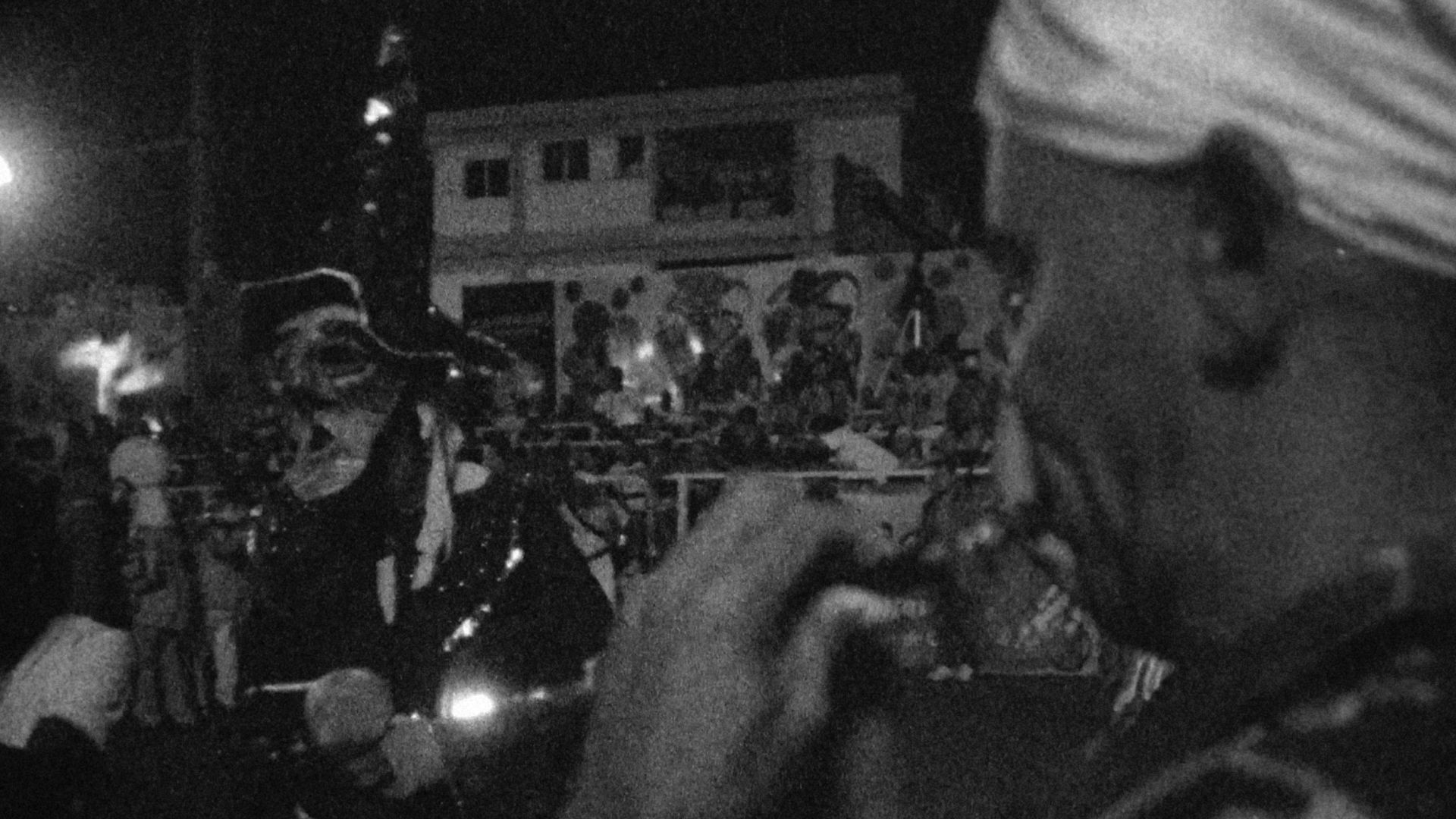
A “Chinese trumpet” sounds and summons a history that the Caribbean almost forgot. Corneta China is an experimental documentary filmed in 16 mm that explores the history of Chinese migration in the Colombian Caribbean: the Chinese workers who arrived on the Isthmus of Panama under contracts of slavery, their subsequent escape and settling down in Santa Marta and Barranquilla, and the invisible mark they left on the region’s identity. Via photographic and historical archives, oral testimonies, and experimentation with sound using the suona as the common thread, the film goes through three phases (the initial journey, the arrival, and the carnival) to tell the story of presences that merged into Caribbean culture without leaving a visible trace, inevitably permeating the history of what is now Colombia.
La Vulcanizadora is the studio created by María Rojas Arias and Andrés Jurado, where cinema, art and the archives explore history, resistance, and expanded and varied forms through cinema. It acknowledges the cultural legacies from Africa, Asia and other regions, establishing connections that extend to the Caribbean, the Amazon and the Orinoquia regions of Columbia. La Vulcanizadora is inspired by workshops located in unexplored territories dedicated to repairing and strengthening materials obtained from the sap of a tree.
AUREOLA INFINITA BY ANA CÍSCAR AND RUBÉN MARÍN
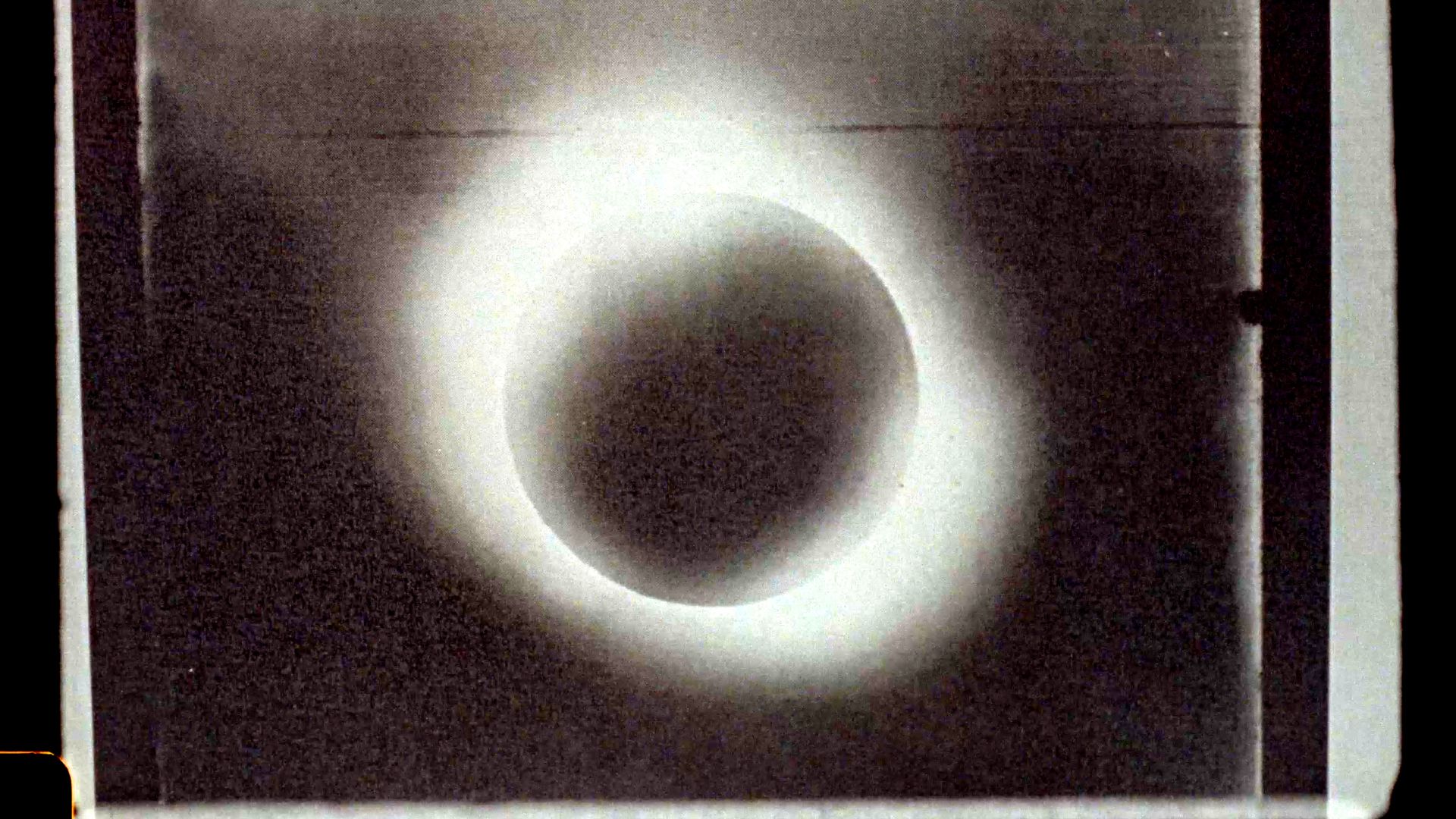
Aureola infinita (Infinite halo) is a film in progress, shot entirely in 16 mm using the frame-by-frame procedure. The film is arranged based on a set of scientific and technical images—photographs of eclipses from the late 19th and early 20th centuries, specimens of fauna and flora exhibited in natural history museums, and groups of spectators observing eclipses and the Apollo 11 moon landing—which act as tools that have historically helped shape specific ways of seeing, classifying, and understanding reality. Through the recurrence of motifs such as the eclipse, collective observation, and optical mediation devices, Aureola infinita explores how images not only record the world, but arrange it and make it visible, opening up a space in which its apparent evidence cracks up and gives rise to new forms of perception and sense.
Rubén Marín is an audiovisual creator, researcher, and teacher. His work sits at the crossroads of experimental cinema and contemporary art, focusing on hybrid forms of the moving image, paying particular attention to their conditions of production, means of articulation, and the devices that make them possible. His artistic practice revolves around the moving image—film and video—as well as photography, installations and performance art.
Ana Císcar is a visual artist and teacher in the Painting Department of the Universitat Politècnica de València (UPV). She carries out her work within the field of contemporary painting, with a focus on the image and its narrative potential, exploring the tension between documentary photography and the interpretive and constructed condition of painting. Using archival and press images, she applies strategies of montage, erasure, and recomposition to question the politics of visuality and generate open interpretations.
LUZ DERRAMADA (SPILT LIGHT) BY GONZALO MANCHÓN
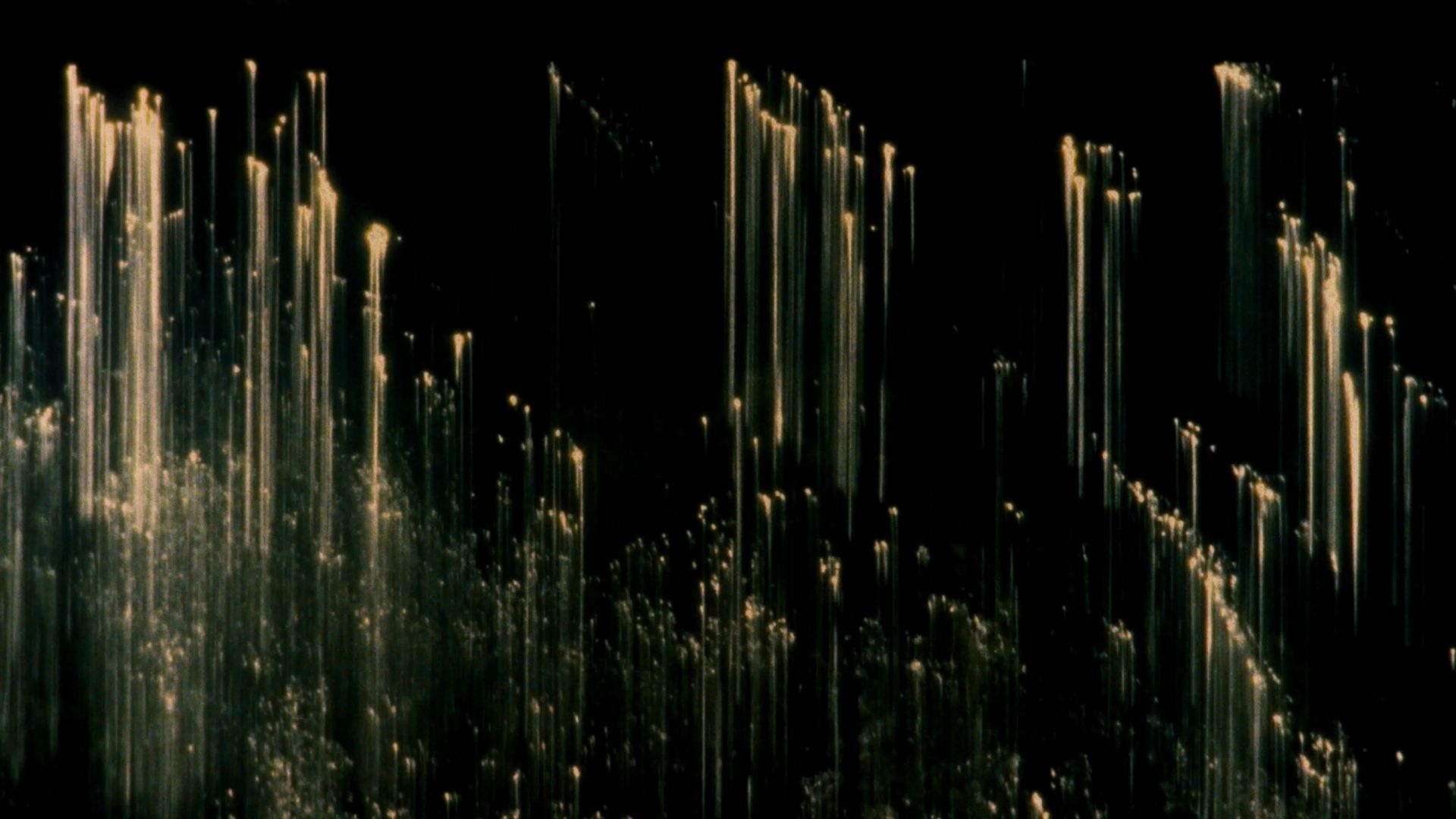
This is an exploration of the relationship between the medium of film and time via 16 mm hand-crank filming, which enables one’s hand to determine which fragment of time is to be condensed into the image. The boundary between light and body, the hand freeing itself from the machine until it finds the bodily limits of the exposure. It is a process that, far from seeking to replicate the camera’s “real movement”, sets out with the idea of showing the condensation of time through the pictorial dimension of cinema.
Gonzalo Manchón was born in Valladolid in 1999. After studying for a degree in Art History (Complutense University of Madrid) and a degree in Cinematography (TAI, Madrid), he is currently taking the MASTER.LAV course (LAV, Madrid). His work is geared towards the search for the specificities that the medium of film can provide, taking a special interest in the technical handling of the material media that make it possible, and the implications this has on the artwork.
ASSAIG_D’APPROXIMACIO ARA O MAI BY CARLOS BAIXAULI
Assaig_d’approximacio a Ara o mai (Essay approaching Now or never) is a political film essay reflecting upon Valencian identity (origins, language and self-determination) via a denunciation of the far-right terrorist attacks during the democratic transition until the statute of autonomy was reached (1975‒1982). This work, halfway between a Chinoise from the Spanish Levant and an Hour of the [Valencian] Furnaces, seeks to answer the question: what does “Valencian” mean?
Carlos Baixauli is an arsonist [filmmaker]. In recent years he has managed to burn three olive trees, a palm tree and nearly six hundred metres of film in different formats. He works as a lecturer at the Camilo José Cela University and is the coordinator of the Val del Omar Archive.