ELS VAN RIEL
PROGRAMME 1
Cantones Cine | Thursday June 4 | 5:00 pm | Free entry to all venues until full capacity. It will not be possible to enter the venues after the screening has started.
UNWRITTEN PAGE
Els van Riel | 2001 | Belgium | 16 mm | 10 min
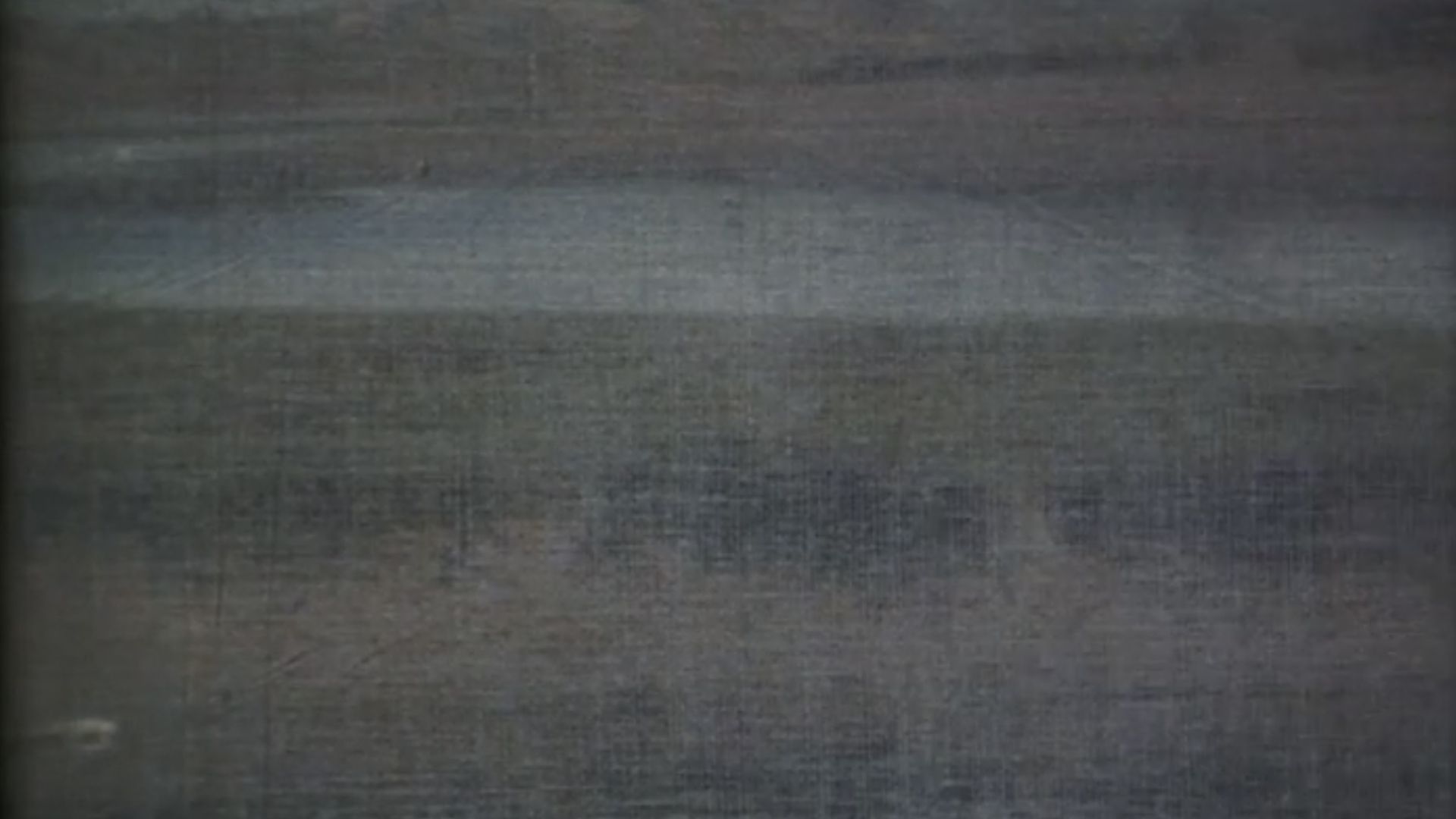
Unwritten Page is a 16 mm film made for a composition by Antoine Beuger. I was asked to select a contemporary piece of music to be performed live by a small ensemble, Q-O2, and to make an ‘incidental film’ to it. It was to be part of an evening programme called “Muziek in Beeld”, music in image. Initially it was difficult for me to understand why one would want to add a moving image to an existing piece of music. The only answer to my question that was given to me was “why not?”. At that time I was interested in making moving images without ballast. I was trying to filter out the basic needs to get to ‘a film’ and kept nothing but a screen, projected light and time as the necessary elements to make an image move. Listening to the recording of Unwritten Page by Antoine Beuger, I found a companion. I was surprised to hear its minimal and simple violin tones appear and disappear, with their careful presence only to be noticed in the detailed changes and during the spaces of silence between them.
(Els Van Riel)
FUGUE, A Light’s Travelogue
Els van Riel | 2017 | Belgium | 16 mm | 27 min
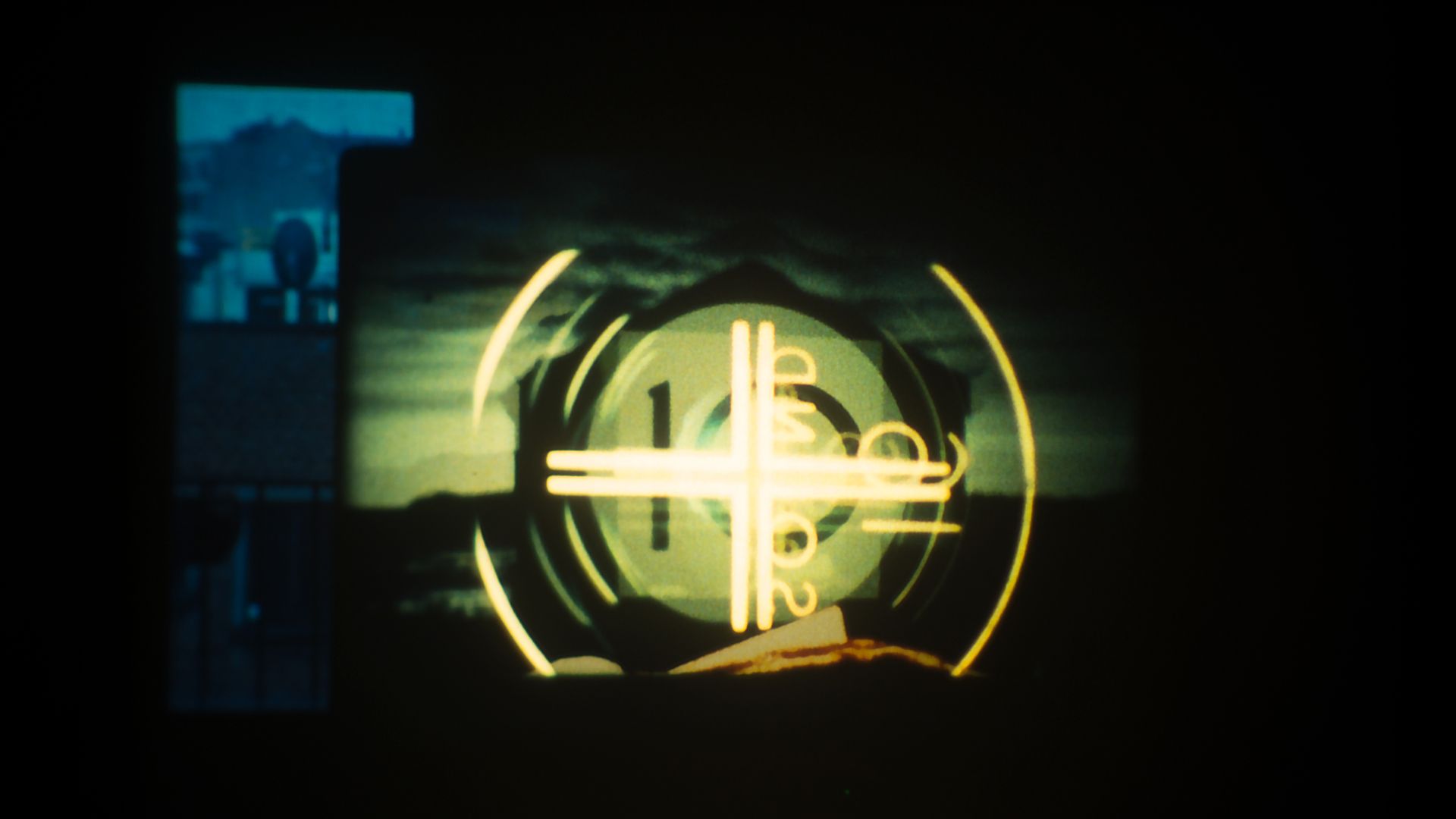
Through this work, I’ve been exploring the physical consistency of light: sunlight as well as artificial light.
A complete answer or formula has not been found. Finding a way to express the wish to understand is what this film is about.
Maybe this is enough?
(Els van Riel)
ELLIPTIC
Els van Riel | 2025 | Belgium | 16 mm | 30 min
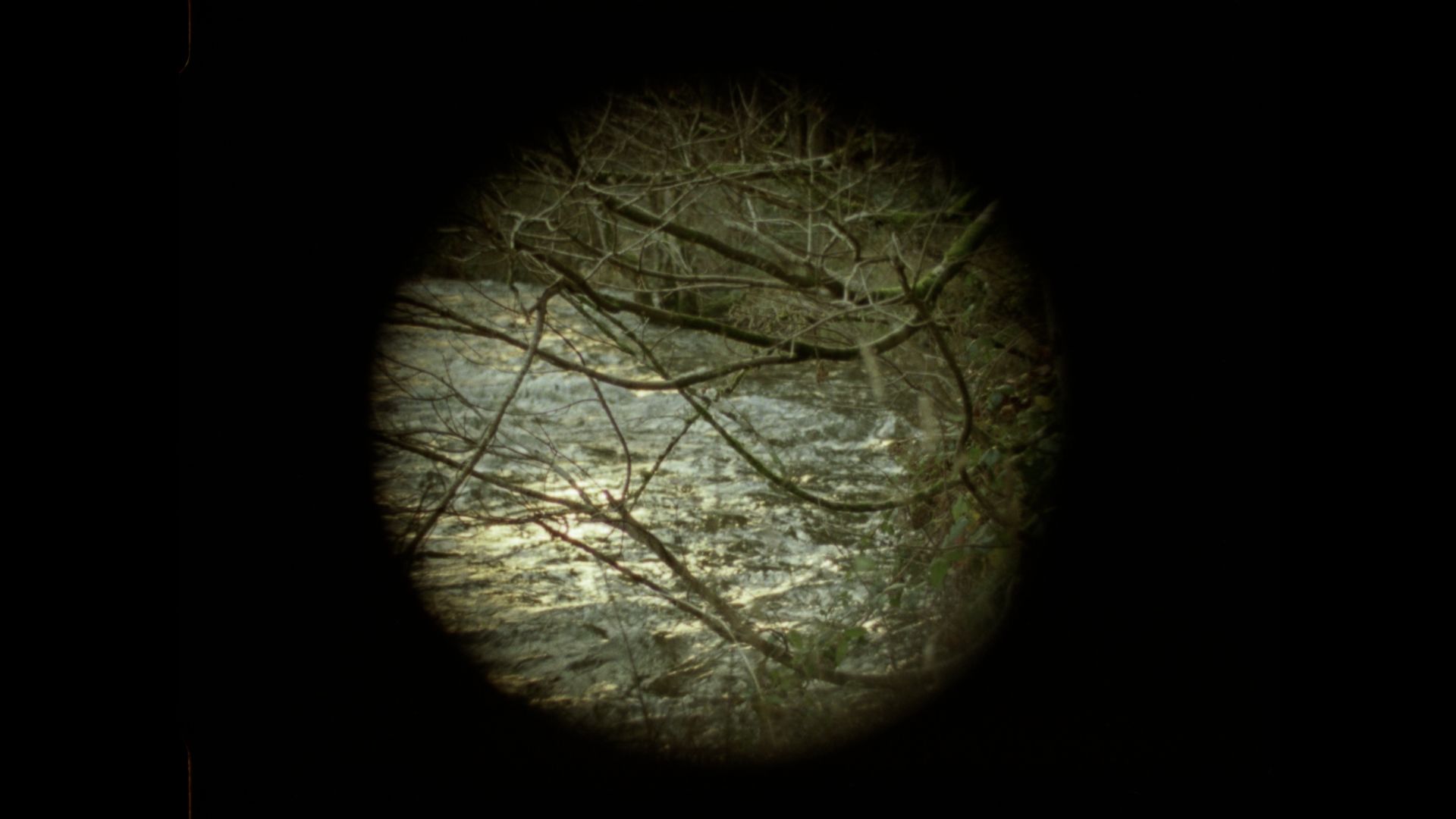
Elliptic is a filmwork that considers an image as reflecting light. It looks at how brightly a beam of light is deflected as it hits an edge and transforms the image as it enters a lens. A delicately slow focus shift carries this movement along the cone of the visual field into a certain depth, and back again. Surprises appear slowly, and disappear to make place for a next one. An important remark is that this film needs to be seen from beginning to end, most likely not on a computer screen.
Sound and Composition by Marie-Cécile Reber.
(Els van Riel)
ELS VAN RIEL
THE TRANSFIGURATION OF LIGHT
In 1676, Antoni van Leeuwenhoek, an official in the Delft city council, discovered the existence of microscopic beings. That form of life, until then unknown and unsuspected, became visible thanks to a microscope that he himself built by painstakingly polishing tiny lenses. It is a paradigmatic case of how optics has allowed human beings to see the invisible, a case revealing that there is a world which, even though right in front of our eyes, we are not able to see without these prostheses or instruments to study it. Els van Riel’s films confront us precisely with that: each one of them is a fine work of polishing the cinematic image to reveal unsuspected layers in the seemingly most banal of things. Through her experiments, we can empirically verify what light, vision, and optics are: phenomena so embedded in the experience that all people with the gift of sight have of the world that they do not catch our attention. Optics, mechanics, and photochemistry serve to deconstruct and reconstruct them in surprising ways, following van Riel’s intuitions.
Els van Riel, originally from northern Belgium (not far from Delft), lives and works in Brussels. She first trained in photography and then in film, in addition to working as a projectionist. She was also involved in the experimental music and sound art scene in Brussels, and later with collectives such as Labo BxL and Cinéma Parenthèse. Her work concentrates on the moving image (cinema and video) not only in the form of films but also installations, all of them artworks that contemplate light and its mechanics in different ways.
Such contemplations on light require their own instruments. Just as one needs microscopes to study microorganisms, the tools that van Riel uses for her work of dismantling and analysis are lenses, optics, cameras, and photosensitive film. That is why the thinking involved about the device (both the camera and the projector) cannot be separated from her research work. In the exhibition we are dedicating to her, we will be able to see films where this becomes clear, as is the case with Gradual Speed (2013). Driven by what at that time seemed to be the imminent disappearance of photochemical film, this movie is composed of a series of images progressively emerging from total whiteness due to overexposure until they turn towards darkness. The method is important in the research: in this case, it consists of varying the camera’s shutter speed from two frames per second (thus allowing light to enter for longer, exposing the film) to a standard higher speed, which exposes it correctly. This in turn leads to a rarefied speed in the motion when projected at 24 frames per second. Unwritten Page (2001) was made as an accompaniment to a musical piece, and it also starts from white, with light completely bathing the screen from which an image gradually emerges, which seems like a painting because it is captured through the weave of a fabric. Fugue, A Light’s Travelogue (2017) is a kind of history of light inspired by a collage of archival and original images. From engravings of early theories (such as the one positing that our vision of the world was obtained from rays emitted by human eyes), to a portrait of al-Haytham, an Arab mathematician and physicist who wrote the Book of Optics between 1011 and 1021. He postulated the true nature of light along with the advanced theory that vision was formed in the brain, up to the effigy of Thomas Young, who discovered the nature of light as waves, and that of Cecilia Payne-Gaposchkin, who studied the luminosity of the stars. It is a compendium of images by and of scholars, scientific illustrations, and also records of artificial light (electric and candlelight) and more, which are all amalgamated into a structure that begins with the filming of a projected film that is then developed, projected over the previous one and re-filmed again and so on, adding more and more layers to the filmed projection, and moving the camera a little further away each time to encompass the projection space. This illustrated and “stacked” story is given a layer of empiricism through the use and behaviour of light throughout the film: the artificial light from the projectors, the light that the camera collects when the beams of light from the eight projectors she uses gradually overlap, and the natural light we see in the windows at the back of the studio where everything is happening as dawn breaks. Finally, Elliptic (2025) studies the behaviour of light in conjunction with optics via a series of slow focus changes in different images, revealing and concealing elements in the frame.
There are several qualities that remain constant in van Riel’s films. One is their structure: most are based on variations of the same method, attempts at experimentation with different results. This is the case with Gradual Speed and Elliptic, in which the same procedure is repeated for different motifs and with results that vary according to those motifs. In Fugue, A Light’s Travelogue these variations play out rather like a Russian doll. In her films, the lack of image also plays an important role, both due to the excess of light and the depth of the lens’ focus, as well as the darkness that fails to imprint on the film. Echoing this, silence is also essential in some of her films’ soundtracks, made in collaboration with sound artists. Of course, time is another decisive factor in her work. The gradations and details are slowly revealed; hence the inherent role of cinema in this research. This progression allows us to feel in our own flesh that light is, in effect, the sum of particles travelling in waves to settle upon the photosensitive surface of the film. As van Riel herself says in an interview, it is as if the strip of film were a piece of time, as if we could grasp time with our hands.
Another thing present in van Riel’s cinema is the deception and disillusionment of one’s eyes, and even the idea of trompe l’oeil. In Unwritten Page, we go from seeing a white surface to seeing what looks like a canvas and a painting, which we then realise is not actually that thanks to the motion of a passer-by (the use of gauze between reality and the camera also alludes to painting by reminding us of Alberti’s veil, a “drawing machine” of the 15th century). In Gradual Speed, it almost becomes a game for the viewer to guess the motifs, as does seeing the details revealed or hidden in the image by changes in the amount of light received by the film. In Fugue, A Light’s Travelogue, it takes us a while to realise that what we are seeing is the filming of a projection, and to become aware of the space surrounding it. In Elliptic, it is practically magic to see the unexpected things emerging from the gradual change of focus. What initially appears to be an abstract motif gives way to things impossible to anticipate: we watch in amazement as a forest or a sea emerges in the background of an image that did not seem to contain them at all.
However, even with all of the thought applied in the very concept of each film, Els van Riel’s cinema is more than an experiment or a scientific study. These films also exude warmth; they are images that appeal to the senses and feelings. Water, the sea, an animal, a person sleeping, the buds on a tree, the sun bathing a photo of a loved one inside a home. It is the light that becomes transfigured not only so as to be analysed and understood, but to fall upon the sensitive surface of our psyche.
Elena Duque