The 17th Mostra de Cinema Periférico bade farewell with a day full of emotions and unique screenings by John Porter and Jeanne Liotta, with new eclipses, surprise shows and a playful ending.
The awe-inspiring attendance of young filmmakers, especially women, in the Sinais and Sinais Latinoamérica sections has confirmed the festival’s role as a driver behind filmmaking.
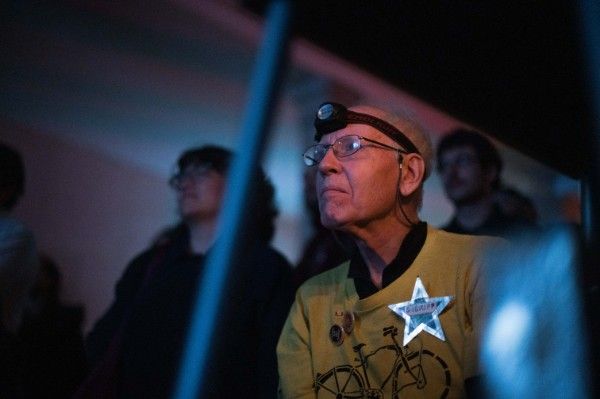
John Porter headlined a memorable closing ceremony for (S8). PHOTOS: Andrea R. and A. Morandeira.
If we stick to convention, then next year (S8) will reach its legal age of majority. But the truth is that this 17th festival has already confirmed what we have been noticing year after year: that the seed of avant-garde cinema is planted, cultivated and reproduced at the Mostra de Cinema Periférico in A Coruña, which is entering its age of maturity contributing to a new, revolutionary time for the analogue format.
Established figures, young artists, and an audience from Galicia, Spain, America and Europe have shared a week of surprising, radical, emotional, profound, and even funny cinematic experiences. But if this Mostra has stood out for anything, it is for the feeling of having experienced unique moments in each session. For Ángel Rueda, co-director of (S8), it has been “a sublime festival” that has reaffirmed the importance of the curated proposal, intended to get the programmes to engage with each other without overlapping timetables, so that all kinds of audiences can become familiar with the avant-garde of cinema.
With an animated version of the eclipse photographed by José Sellier opening each programme, the four venues of (S8)—the Filmoteca de Galicia, Domus, Cantones Cines and the Luis Seoane Foundation—were not big enough to accommodate the large number of people who wanted to discover the work of John Porter, Jeanne Liotta, Bruno Varela and Els van Riel. In total, there were more than eight thousand participants who attended the different programmes, including the Bruno Varela installation at the Luis Seoane Foundation, with prominent queues forming to enter the retrospective shows, perhaps the last opportunity to see these works projected in their original format, which in Porter’s case is also the only screening possible. His films are not digitised, and the Canadian did not allow photos to be taken of the screen, so what took place in his two sessions remains only in the emotional memory of those present and is now part of the history of (S8).
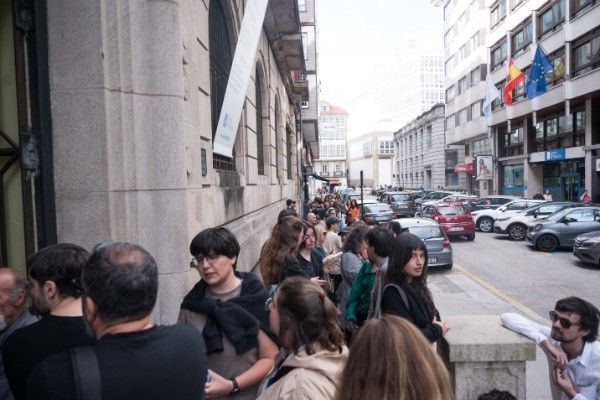
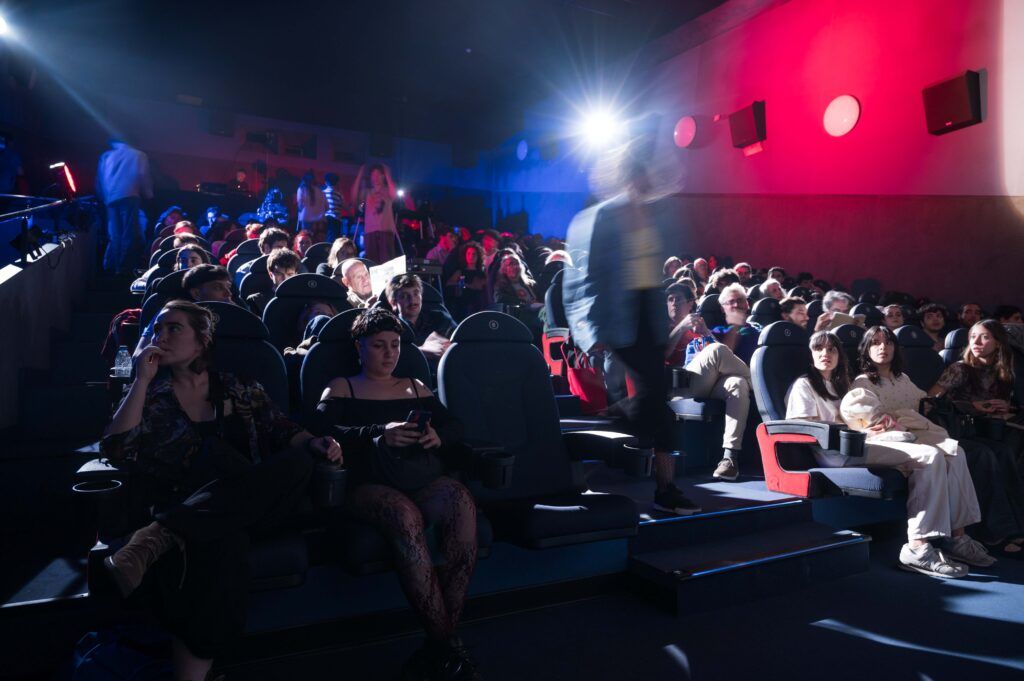
Both the Filmoteca de Galicia and Cantones Cines displayed “sold out” signs.
WOMEN CREATORS SET THE PACE
Sinais is the main exhibition section in (S8), where the most daring contemporary film created from Galicia, Spain and Portugal comes together. In fact, 70% of the works in the programme—a total of 29 pieces, or 35 if we add Sinais Latin America—have been made by women, showing that a new generation of female filmmakers is emerging who have found a space in (S8) to show their films, where they can discover, meet and weave a network of complicity regarding this shared passion for experimental creation. And looking back at the programme, one can objectively affirm that the Mostra is largely responsible for this.
Sinais boasted a carousel of premieres, including several works launched through (S8) like Béal by Juana Robles, created in a BAICC residency, as well as Pompa y circunstancia by Daniela Delgado Viteli, who received tutoring beforehand in the INPUT space. There was also the world premiere of Descubro el rayo, tus ojos tiemblan (I discover the beam, your eyes tremble), by Guillermo Braga, made specifically to appear in the Mostra. The expanded cinema evenings at the Seoane Foundation once again provided some of the most emotionally intense moments. The performance of Morada Aberta: onde o gesto cura by Tânia Dinis enthralled the audience with the help of A Coruña’s changing weather, which decided to sprinkle a fine rain at the exact moment when the piece invokes the sea.
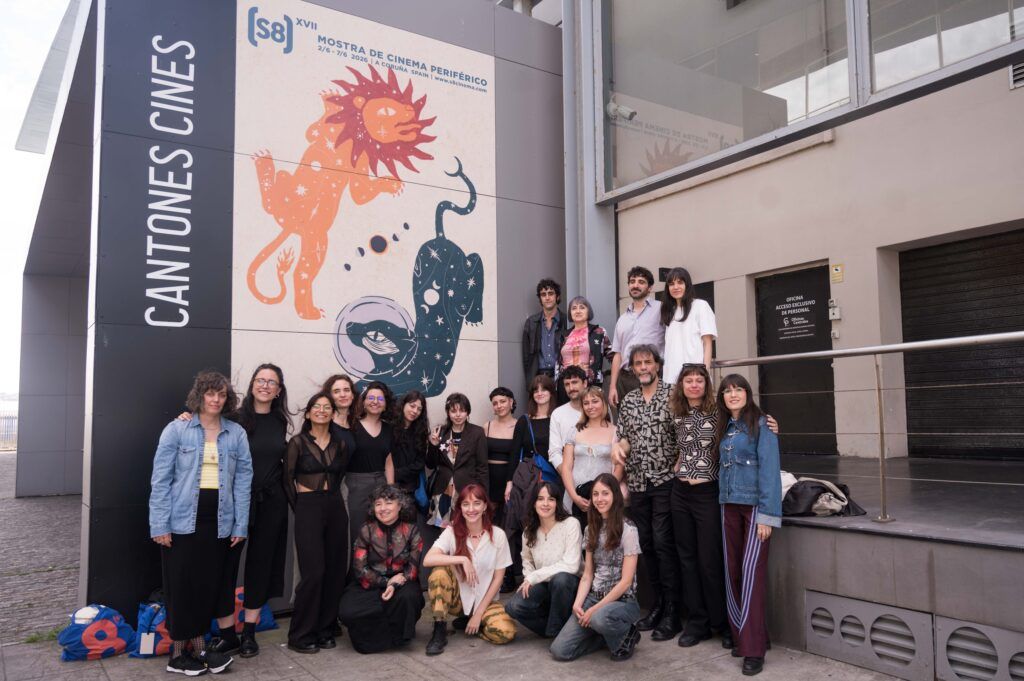
70% of the films at Sinais were directed by women.
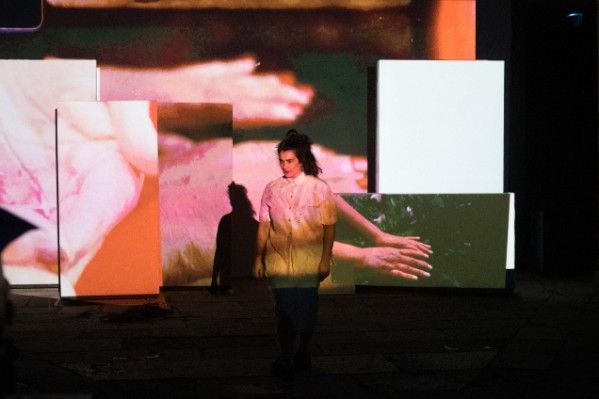
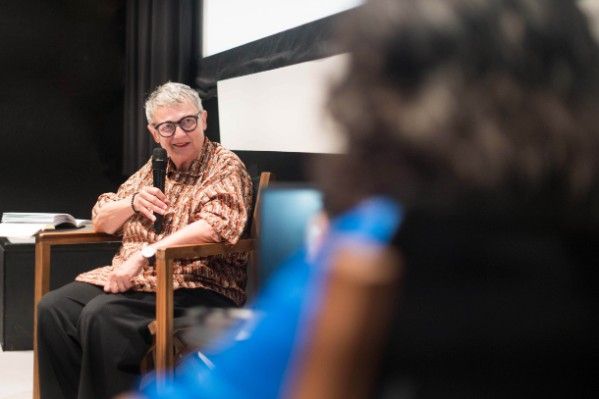
Tânia Dinis during her Desbordamiento and Karola Gramann of the Kinothek Asta Nielsen.
A CLOSURE FOR THE HISTORY BOOKS
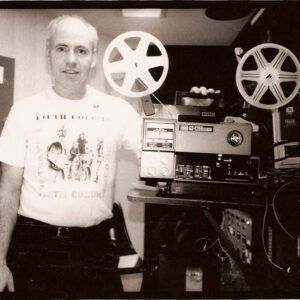
Three and a half minutes, the same as a roll of Super 8 film. That is the length of most movies by John Porter, an exemplary in experimental cinematography both for his coherence—he never filmed in any other format—and for his creative process. His works are an idea executed on the fly, edited in the camera itself, developed and turned into a unique piece that in many cases only make sense during the screening in which he himself participates. Such is the case of Shootout with Rebecca (1983), Animal in Motion (1980) and Revolving restaurant (1981), included in the closing session of Desbordamientos on Saturday.
With a playful approach and radical honesty, Porter’s final performance led to applause, laughter, and cheers from the audience, who were aware that they were experiencing a unique moment. That same feeling swept through the seats of the Filmoteca de Galicia during its first programme, which some defined as a historic moment. The 79-year-old Canadian artist had stated that his presence in A Coruña was a farewell to the international stage, and with his energy and vibrant personality he transformed it into a collective celebration of creative freedom and of Super 8.
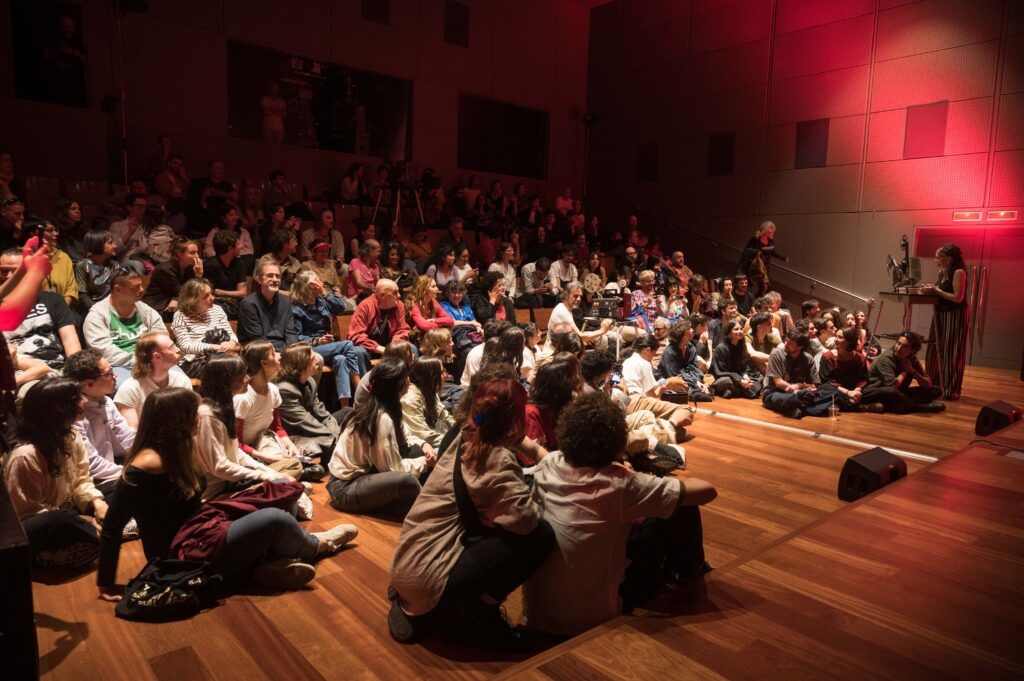
Jeanne Liotta’s latest program included a surprise screening.
A SURPRISE ECLIPSE
With Porter holding up a projector and shouting “Super 8!”, the end came to a week in which artists, guests and the public experienced the festival together, creating a very familiar atmosphere in all the sessions, especially on Saturday, the last day of the programmes, again with packed rooms. Sinais Latin America showed six proposals with very personal perspectives on emotions. Karola Gramann presented the work of the Kinothek Asta Nilsen, of which she is a founder, dedicated to queer and feminist cinema. And Jeanne Liotta offered a selection of her works dedicated to the cosmos, created over decades: seven films of great impact, both in terms of visuality and sound, designed to imagine what the universe sounds like.
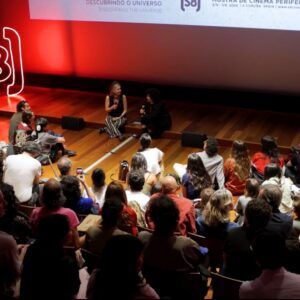
At the end and before the talk began, Liotta announced one last surprise screening. In her suitcase she had included a film of an eclipse that she had shot on Super 8 in the 80s and had not seen since, so she suggested that the audience come closer to the screen by sitting on the floor to watch it with her. It was like a return to the starting point, not only of (S8), which she herself inaugurated with a cinematic eclipse, but to one of the moments that had inspired her, something that only seems possible in a festival like the Mostra de Cinema Periférico.
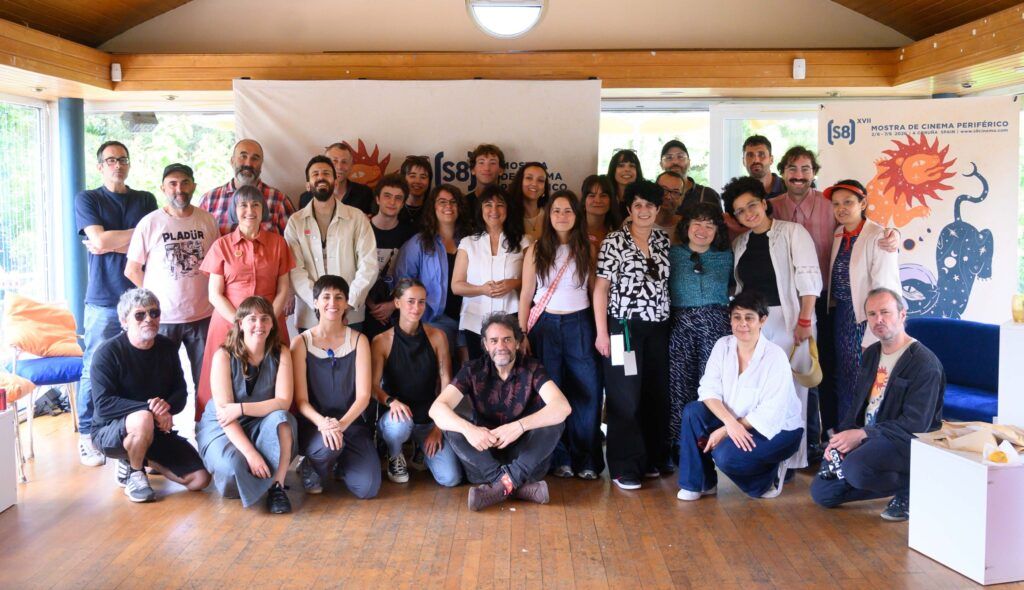
The entire (S8) team.
ACKNOWLEDGMENTS
The (S8) management expresses its gratitude to all of the talent participating in this year’s festival, to the professionals and the public who attended, and to the institutions that helped make this 17th festival possible. We would also like to thank the media outlets that helped to spread news of it. And of course the team that made it a success, including the technical heads and teams at the festival venues: the Filmoteca de Galicia, Cantones Cines, Domus, the Luis Seoane Foundation and Atalaya.
The (S8) Mostra Internacional de Cinema Pereférico is organised by the Asociación Cultural eSe8 and can count on sponsorship from the Concellería de Cultura e Turismo do Concello da Coruña and support from the Axencia Galega das Industrias Culturais da Xunta de Galicia(Agadic), the Deputación da Coruña, the Instituto de la Cinematografía y de las Artes Audiovisuales (ICAA), Acción Cultural Española (AC/E) and the Fundación Luis Seoane.