- This year, the programme includes four sessions, with a projection in 16 mm analogue format and a meeting with Galician director Sandra Sánchez.
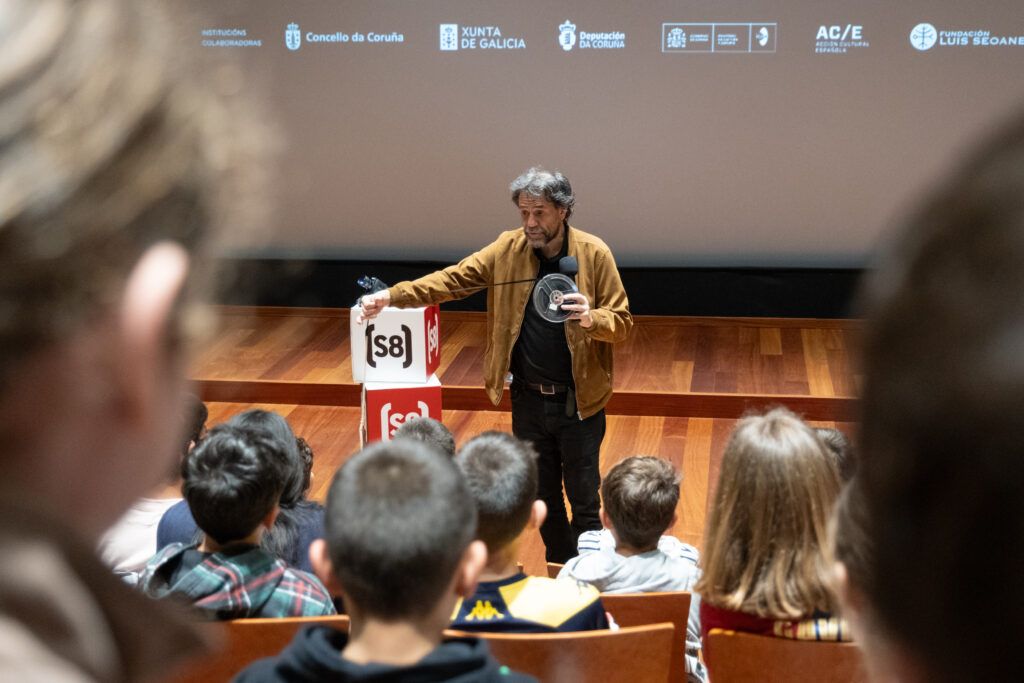
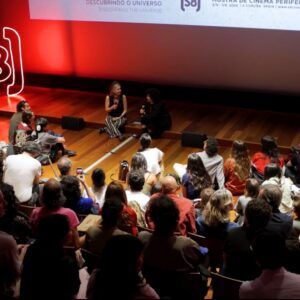
Ángel Rueda, co-director of the (S8) welcoming the participants. Photos: Andrea R.
The educational screenings by (S8) have been the start of the pre-festival activity for years, and this 2026 nearly four hundred schoolchildren from public schools in A Coruña attended. There were four sessions on 7, 14, 20 and 28 May, in which students from different neighbourhoods of the city discovered analogue cinema and had the experience of participating in a film festival. All the sessions were held in the Domus museum where, as the co-director of the Mostra Ángel Rueda explained: “the magic happens”.
And it is precisely that magical vibe that made this year’s festival no exception. After the welcome, every time the lights in the hall went down and the rattle of the analogue projector began. As soon as light flooded the screen, the students were able to discover the A Coruña of their grandparents portrayed on 16 mm film. That will occur with the films El cochecito (1952) and Auriga (1955), both anonymous in origin. The first one shows a group of children playing in the streets. In the latter, migrants are seen boarding El Auriga, a transatlantic ship that sailed the Italy‒Venezuela route and took many Galicians to Latin America.
After the screening, the hall fills with questions and the audience begins to share out strips of celluloid and Super 8 cameras, with most of them experiencing and touching analogue cinema for the first time. Yet this first part is just an appetizer, since they then attend the screening of several examples of experimental cinema.
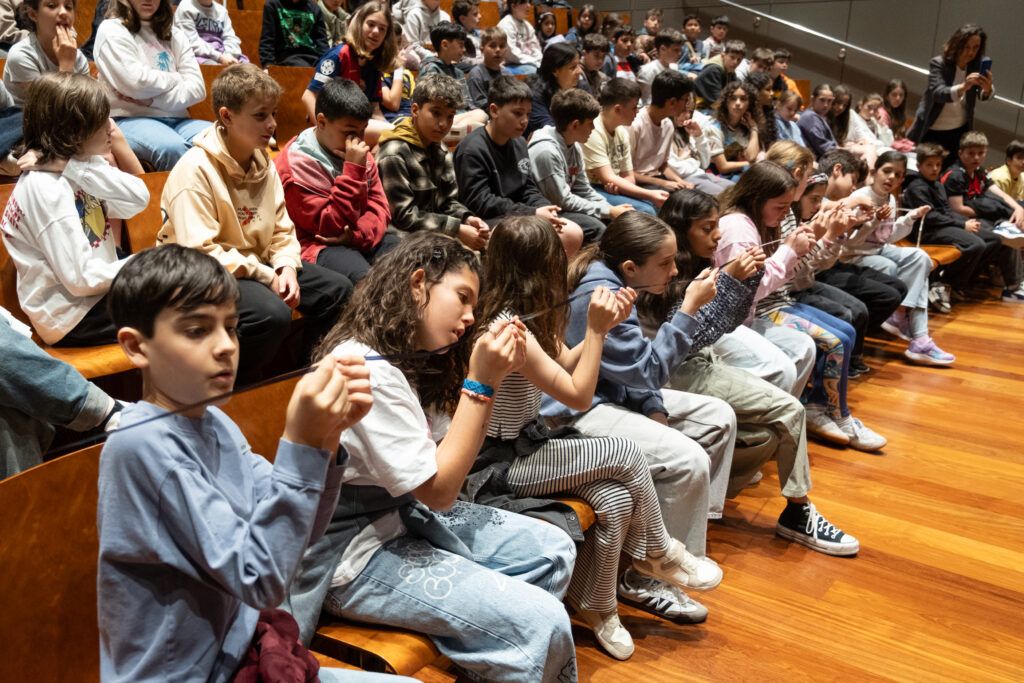
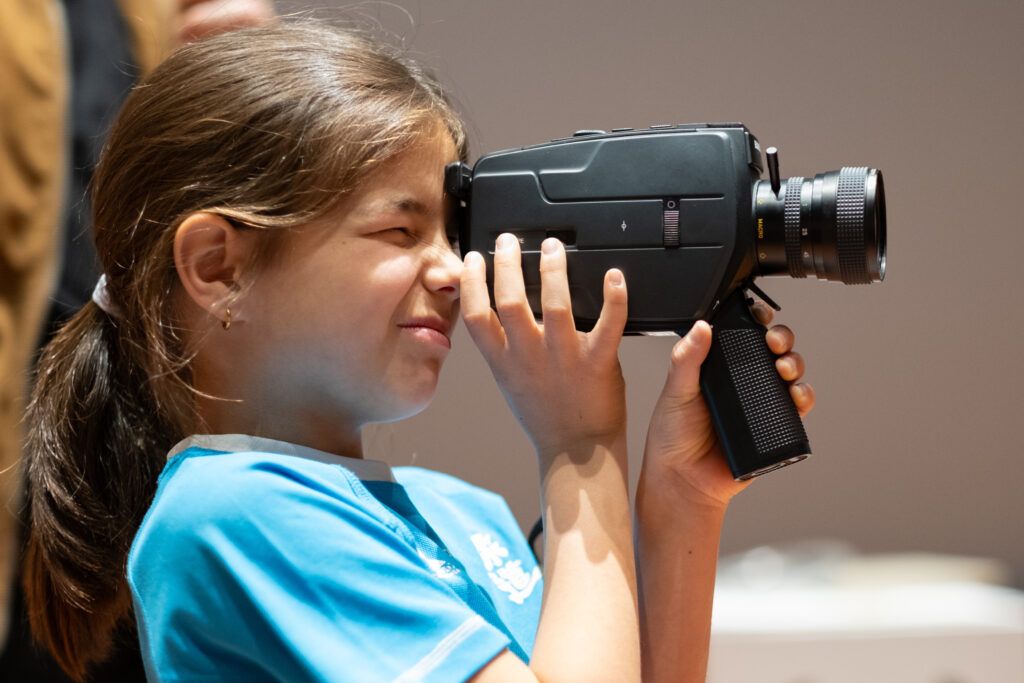
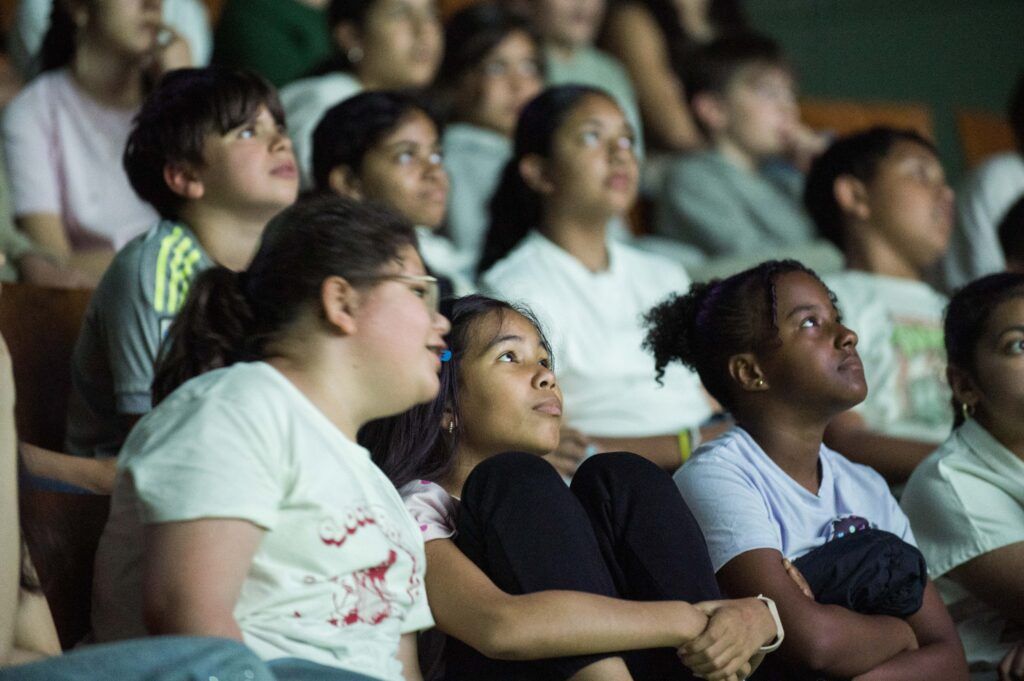
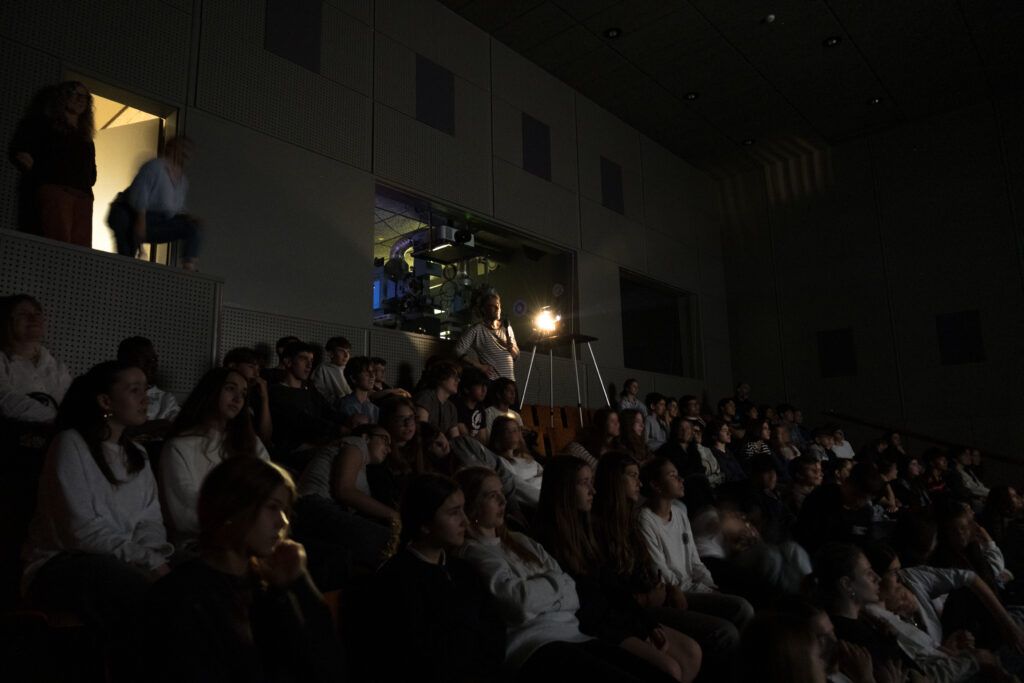
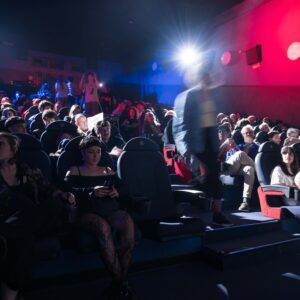
Participants get a firsthand look at the analog format.
SANDRA SÁNCHEZ, GUEST DIRECTOR
This year, the selection of films included several experimental movies, amongst them Bajo la almohada (2012), by Isabel Herguera, a referent in international animation. Also Lavado de cara (2007), by Xose González and La mar salada (2014), by Elena Duque. The main part of the programme were the films by the A Coruña-born director Sandra Sánchez, playing Matías (2015), made at the Chanfaina Lab in San Sadurniño; A nena azul (2018), with which she has won numerous awards such as the Mestre Mateo for best short fiction film; and Ven a Bens (1992), her first work, made when she was a student and which portrays the community that lived off making use of rubbish from the Bens landfill in A Coruña, which no longer exists. After the films, the director herself joined the Q&A, in which schoolchildren ask about the filmmaker’s process, ideas, and career.
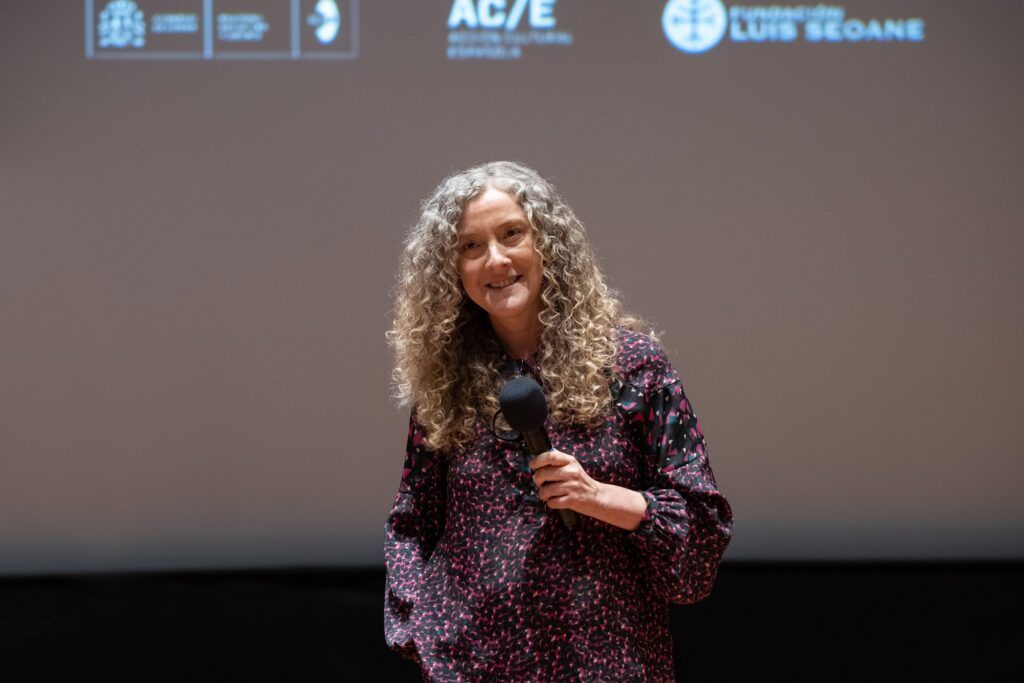
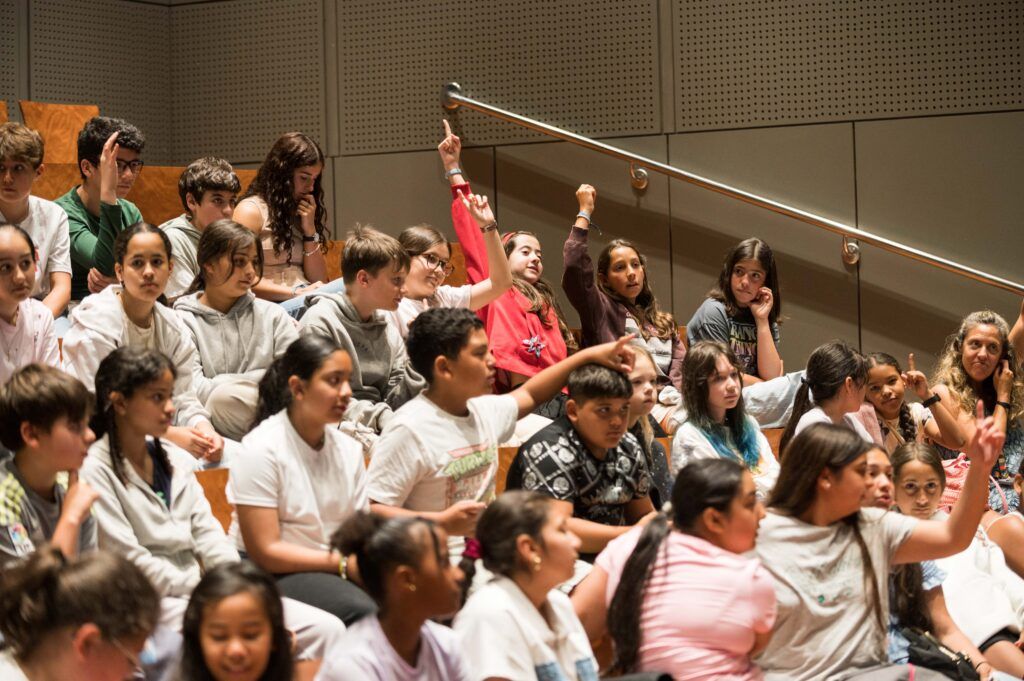
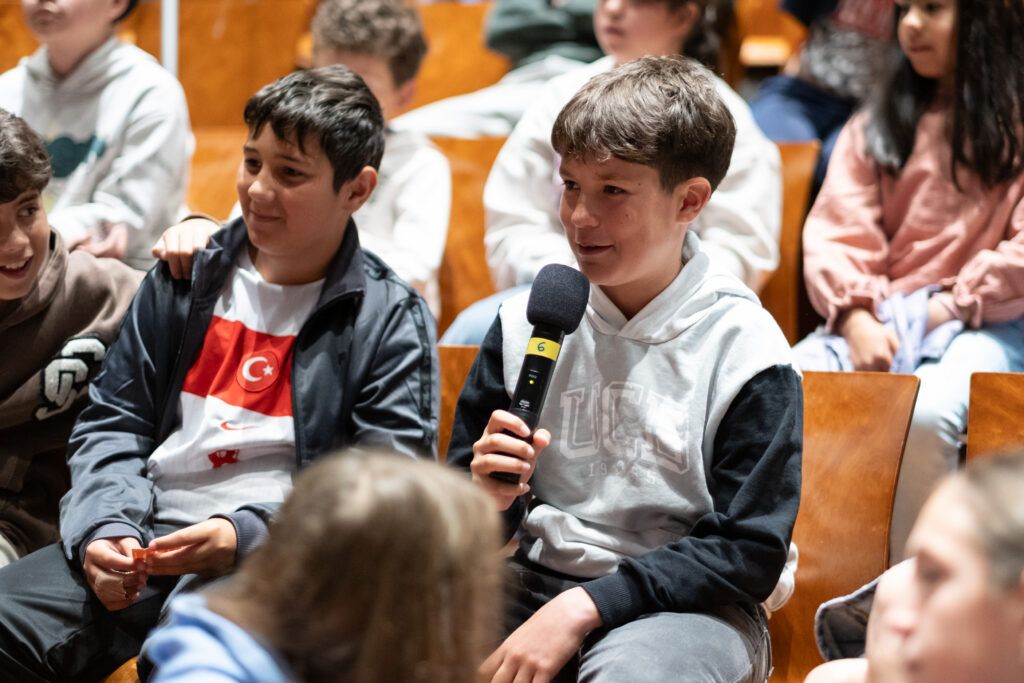
Galician director Sandra Sánchez led the discussion.
The following schools took part in these sessions: IES Rafael Dieste, CEIP Concepción Arenal, CEIP Gándara Sofán, IES Ramón Menéndez Pidal, CEIP Curros Enríquez and CEIP San Pedro de Visma. In total, this year featured educational screenings for approximately four hundred pupils aged 8 to 15 years old. This initiative can count on collaboration from Museos Científicos Coruñeses and the Concellería de Educación, Formación e Innovación Tecnolóxica of Concello da Coruña.
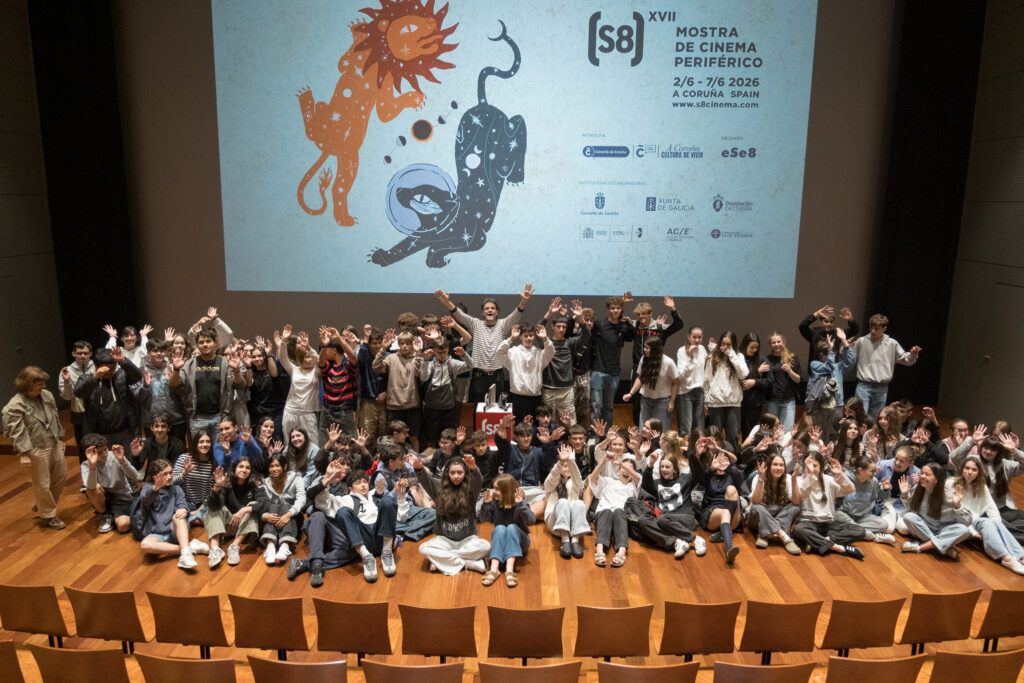
The encounter is held in the Domus museum.